OffNet Newsroom

Daily topic roundup

AWS

Friday, September 18, 2026 · 8 stories, curated & summarized — click any story for the source.

Intuit and AWS used Fault Injection Service to simulate a real Availability Zone impairment on Amazon ElastiCache. The automated response reduced recovery time from over 50 minutes to under 2 minutes without manual intervention. This systematic validation effectively eliminated customer impact during the simulated outage.

  • Automated failover via FIS is critical for sub-2-minute recovery in ElastiCache
  • Proactive fault injection validates resilience before real-world outages occur
  • Zero manual intervention required for Intuit's AZ impairment recovery scenario
  • Systematic testing eliminates customer impact during availability zone failures

Fleet impact: For ExaCC/RAC and Aurora fleets, this highlights the necessity of automated fault injection testing to validate failover paths. Ensure your RDS/Aurora read replicas and ExaCC instances are configured for rapid, automated switchover to avoid prolonged outages during AZ failures.
AWS Transfer Family now supports source IP preservation for SFTP servers behind a Network Load Balancer using Proxy Protocol v2. Previously, the NLB masked the client's actual IP, forcing logs and identity providers to see only the load balancer's private address. This update enables administrators to retain visibility of the true client IP for auditing, access controls, and compliance requirements.

  • Enables Proxy Protocol v2 to pass original client IP through NLB to Transfer Family SFTP endpoints.
  • Restores ability to perform IP-based auditing and logging with accurate source addresses.
  • Allows custom identity providers to authorize users based on their true source IP instead of the NLB IP.
  • Supports stricter compliance and security policies requiring granular access control by client origin.
  • Applies specifically to VPC-hosted SFTP endpoints placed behind an NLB.
TRADE-OFFSFTP IP VisibilityBefore (NLB Masked)Logs show NLB private IPNo true client sourceCompliance audit gapsNow (Proxy Protocol v2)Logs show real client IPAccurate source addressStrict access control enabledvs

AWS has released general availability for T8i instances, featuring custom sixth-generation Intel Xeon 6 processors and AWS Nitro hardware. These new micro, small, medium, and nano sizes offer up to 30% better price performance than T3 instances, alongside significant gains in compute, network, and EBS bandwidth. They are optimized for low-to-moderate CPU workloads such as small databases, CI/CD pipelines, and event-driven functions.

  • T8i instances provide up to 70% higher compute performance compared to previous T3 generations.
  • Network bandwidth increases by 1.25x and EBS bandwidth by 2.4x over prior burstable options.
  • Available in nano, micro, small, and medium sizes for cost-sensitive, variable workloads.
  • Ideal for small databases, CI/CD pipelines, and low-traffic microservices requiring burst capacity.
COMPARISONT8i vs T3 Performance GainsPrice Performance30%Compute Performance70%EBS Bandwidth2.4xNetwork Bandwidth1.25x

AWS Direct Connect now offers a single fixed monthly price for 10 Gbps and 100 Gbps dedicated connections, eliminating per-gigabyte data transfer out charges within the selected tier. This model addresses the unpredictability of costs for workloads with large, sustained data egress, replacing the previous pay-as-you-go structure. The change targets network architects and FinOps teams seeking stable, predictable networking expenses without long-term contracts.

  • Flat-rate pricing removes variable DTO charges for 10G and 100G dedicated connections.
  • Monthly costs become predictable for workloads with large, sustained data egress volumes.
  • No upfront commitment or long-term contracts required for this new pricing tier.
  • Ideal for FinOps teams stabilizing network spend on high-throughput hybrid architectures.
TRADE-OFFDirect Connect Pricing ModelsPrevious ModelPay-as-you-go ratesUnpredictable monthly costsVariable data transfer chargesNew Flat RateFixed monthly pricePredictable budgeting for 10G…No upfront contracts requiredvs

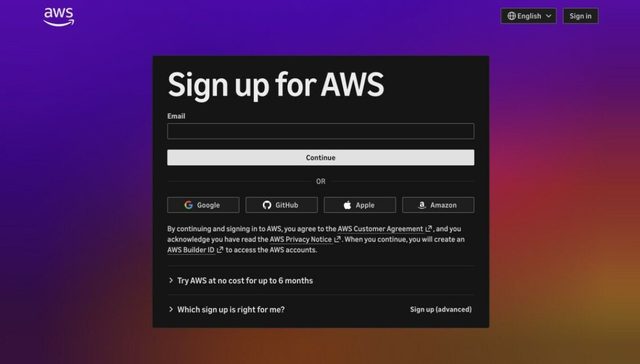
AWS has released an improved signup flow specifically targeting 'AI builders' that simplifies the initial onboarding process. This new experience deliberately hides underlying infrastructure complexity and introduces a spending cap to reduce friction for new users. The move aims to lower the barrier to entry while managing cost expectations for less experienced practitioners.

  • New onboarding flow targets AI builders specifically, not general AWS users
  • Simplified UI hides complex AWS configuration options from new signups
  • Automatic spending cap included to mitigate surprise billing risks
  • Strategy reflects AWS effort to reduce friction for AI workload adoption
AWS What's New awsdatabase ↺ since 09-16

AWS distributes root user sign-in across three regions for better resiliency

AWS has updated root user authentication to route traffic across US East (N. Virginia), US East (Ohio), and US West (Oregon), eliminating the single-region dependency on N. Virginia. The system automatically handles this distribution transparently, requiring no changes to how users sign in. ConsoleLogin events are now logged in whichever of these three regions processes the request, shifting the logging location from a fixed point to a dynamic one.

  • Root sign-in is now distributed across three regions to improve resilience during outages.
  • CloudTrail ConsoleLogin events for root users now appear in the processing region.
  • Update monitoring and alerting to cover N. Virginia, Ohio, and Oregon for full visibility.
  • No action is required to change sign-in behavior as routing is automatic.
CHECKLISTRoot Auth Resilience StepsMonitor ConsoleLogin events in N. Virginia, Ohio, and OregonUpdate alerting rules to cover all three regionsVerify CloudTrail logs appear in the processing regionNo action needed for sign-in routing changes
AWS What's New awsdatabase ↺ since 09-16

AWS Glue zero-ETL adds table ownership and conflict detection

AWS Glue zero-ETL now tracks which integration owns target table properties, preventing accidental overlaps across Amazon S3 Tables and SageMaker Lakehouse catalogs. When a user attempts to create or modify an integration that conflicts with an existing one, the service identifies the owner and guides resolution. This ensures predictable control over data landing zones and keeps pipelines isolated.

  • Glue now associates table properties with the owning zero-ETL integration for better governance.
  • Conflicts are detected when multiple integrations target the same table without coordination.
  • Support spans both Amazon S3 Tables and SageMaker Lakehouse catalogs.
  • Users receive guidance to choose different targets or update existing integrations.
  • Data teams gain predictable control over where source tables land in the catalog.
HOW IT WORKSHandling Table Conflicts1Detect integration conflict2Identify table owner3Guide resolution4Ensure data isolation
AWS What's New awsdatabase ↺ since 09-17

AWS STS consolidates session token limits to 4096 bytes with monitoring

AWS STS now enforces a unified 4,096-byte limit on session tokens, replacing previous separate caps for tokens and input parameters like inline policies. The service returns token size and utilization metrics in responses, logging them to CloudTrail and publishing them to CloudWatch. An optional API parameter allows generating tokens up to the new limit to test infrastructure readiness.

  • Unified 4,096-byte limit replaces separate caps for tokens and inline policies.
  • CloudTrail and CloudWatch provide visibility into token size and utilization.
  • New API parameter enables testing larger tokens against application limits.
  • Simplifies capacity planning for complex session policy combinations.
BY THE NUMBERSNew AWS STS Token Limit4096Unified session token byte limitReplaces separate caps for tokens and inline policies