OffNet Newsroom

Daily topic roundup

LLMs

Tuesday, August 04, 2026 · 8 stories, curated & summarized — click any story for the source.

AWS What's New awsdatabase

GPT-5.6 Sol, Terra, Luna gain 1M token context on Bedrock

OpenAI's GPT-5.6 Sol, Terra, and Luna models now support 1 million token context windows on Amazon Bedrock. This update allows processing of full codebases, lengthy documents, and multi-turn agent histories in a single request without chunking. Prompt caching with explicit breakpoints applies to these long context requests, offering billing discounts for repeated context.

  • Eliminate context chunking for full codebase or document analysis in one pass.
  • Maintain complete conversation history in multi-step agentic workflows.
  • Prompt caching discounts apply to long context requests with explicit breakpoints.
  • GPT-5.6 Sol is available in US East (N. Virginia) and other regions.
BY THE NUMBERSNew 1M Token Context1millionToken context window sizeGPT-5.6 models now support 1M tokens on Bedrock

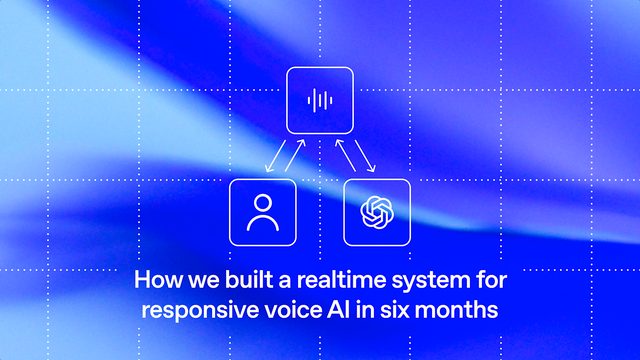
OpenAI has released GPT-Live, a system designed for continuous voice interaction that eliminates traditional turn-taking constraints. The architecture prioritizes low latency to enable faster, more natural conversations between users and AI models. This release represents a significant shift in how real-time voice interfaces handle speech flow and response generation.

  • GPT-Live supports turnless speech models for more fluid user interactions
  • Low-latency architecture is critical for achieving natural conversational pacing
  • System enables continuous voice interaction rather than discrete turn-based exchanges
  • Released in six months, indicating rapid development cycle for real-time features
Hacker News (100+ points) general

LLMs reward expertise: Study shows expert prompts yield better results

A new analysis indicates that LLM performance improves significantly when prompted by users with domain expertise. The findings suggest that nuanced, context-rich instructions from subject matter experts lead to higher quality outputs compared to generic queries. This highlights the growing importance of user skill in maximizing AI utility.

  • Expertise in the prompt's domain correlates with higher LLM output quality.
  • Generic prompts yield inferior results compared to nuanced, expert-level instructions.
  • Investing in user training may be as critical as model selection for ROI.
  • Context-rich prompts leverage the model's latent knowledge more effectively.
  • Expect diminishing returns if prompt quality remains low regardless of model size.
Hacker News (100+ points) general

Swiftlet runs 80B Qwen on 4.3GB RAM Mac and 35B on iPhone

The Swiftlet project demonstrates running an 80-billion parameter Qwen model on macOS with just 4.3 GB of RAM, alongside a 35B variant for iOS devices. This achievement highlights significant advances in on-device inference efficiency, allowing large language models to operate on consumer hardware without cloud dependency. The work showcases practical applications of quantization and memory optimization for edge computing scenarios.

  • Large models like 80B Qwen can fit in minimal RAM via aggressive optimization
  • iOS devices can now run 35B parameter models locally for offline inference
  • Swiftlet provides a practical framework for on-device LLM deployment
  • Edge AI capabilities are expanding beyond typical mobile constraints
  • Memory-efficient inference enables privacy-preserving local model execution
THE SHIFTMassive Model, Tiny Footprint80 GBSTANDARD RAM NEED4.3GBSWIFTLET REQUIREMENTRunning 80B Qwen on Mac

Alibaba has released its Qwen-Max model via API for the first time, expanding access to its top-tier capabilities. Simultaneously, DeepSeek has launched V4-Flash, intensifying pressure on pricing and performance in the open model market. This dual move signals a strategic shift toward broader accessibility and aggressive cost competition.

  • Alibaba Qwen-Max is now available via API, breaking previous access restrictions
  • DeepSeek V4-Flash introduces new benchmarks for low-cost inference performance
  • US model providers face increased pressure from open-source alternatives
  • Cost competition in AI inference is accelerating rapidly

Circles has integrated the OpenAI API and Codex to deliver AI-native experiences for telecommunications providers. The implementation drove a 22% increase in average revenue per user and a 9% reduction in customer churn. Additionally, the company reported improved development efficiency through these AI tools.

  • Telcos adopting AI-native platforms see significant ARPU growth.
  • Customer churn drops notably with personalized AI experiences.
  • OpenAI API and Codex streamline development workflows.
  • AI integration directly impacts key telecom business metrics.
  • Efficiency gains reduce time-to-market for new features.

Batched LLM serving complicates energy accounting because GPU telemetry is aggregate, not per-request. JouleShare addresses this by using an offline harness to establish ground truth energy costs through reproducible vLLM replays. This framework enables request-level attribution for sustainability reporting and chargeback, moving beyond model- or token-level estimates.

  • Aggregate GPU power data is insufficient for precise per-request energy billing or carbon accounting.
  • JouleShare uses offline vLLM replays to create ground truth for request-level energy attribution.
  • Shapley fairness concepts guide the allocation, though this work provides measured data rather than just theory.
  • Enables accurate chargeback and sustainability reporting for batched inference workloads.
HOW IT WORKSJouleShare Attribution Pipeline1Aggregate GPU telemetry collection2Offline vLLM replays3Ground truth calibration4Shapley-based allocation5Per-request chargeback

DiffusionGemma is an experimental open-weight model that generates text using discrete diffusion rather than autoregressive decoding. It refines blocks of 256 tokens in parallel, bypassing the sequential bottleneck of standard LLMs. The model is derived from Gemma 4 via fine-tuning, utilizing only 10% of the original training token budget.

  • Parallel block decoding of 256 tokens eliminates autoregressive sequential bottlenecks.
  • Open-weight model built on Gemma 4 MoE with 25.2B total parameters.
  • Training uses 10% of the source model's token budget via supervised fine-tuning.
  • Bidirectional denoising replaces next-token prediction for faster generation.
BY THE NUMBERSTraining Efficiency of DiffusionGemma10%Of original training token budgetAchieved via supervised fine-tuning of Gemma 4