OffNet Newsroom

Daily topic roundup

AI / ML

Tuesday, August 04, 2026 · 7 stories, curated & summarized — click any story for the source.

Amazon SageMaker AI extends its serverless model customization to include full fine-tuning capabilities for over 25 open-source models, including Llama, Gemma, and Qwen families. This update allows engineers to update all model parameters rather than relying solely on parameter-efficient methods like LoRA. The feature enables deeper adaptation for domain-specific patterns, specialized reasoning, and complex output formats using proprietary datasets.

  • Full fine-tuning is now available in SageMaker serverless, replacing the need for dedicated GPU instances for this workload.
  • Supports 25+ open-source models including Llama, Gemma, Qwen, Nemotron, and gpt-oss families.
  • Enables deep adaptation for specialized reasoning and complex output structures beyond surface-level style adjustments.
  • Ideal for internalizing domain knowledge from large proprietary datasets where LoRA may be insufficient.
  • Simplifies infrastructure by removing the operational overhead of managing persistent fine-tuning clusters.
BY THE NUMBERS25+ OSS Models Supported25+Open-source models now supportedFull fine-tuning available in serverless mode
GitHub Trending (daily) githubrepos ⚠ unverified date/source

Firecrawl releases Rust pdf-inspector for fast, no-OCR PDF classification

Firecrawl has open-sourced a Rust library that classifies PDFs as text-based, scanned, or mixed in under 50 milliseconds. The tool extracts text with position awareness and converts documents to Markdown without relying on expensive OCR services. It includes bindings for Python, Node.js, and WebAssembly to facilitate local processing.

  • Skip OCR costs for the ~54% of PDFs that are text-based by using smart content stream sampling.
  • Get per-page OCR routing decisions with confidence scores to handle mixed or scanned documents selectively.
  • Deploy locally via Python, Node.js, or WebAssembly bindings for low-latency processing under 200ms.
  • Extract text with position awareness to preserve document structure when converting to Markdown.
BY THE NUMBERSOver Half of PDFs Need No OCR54%Of PDFs are text-basedSkip expensive OCR for these documents

Nova is an automated end-to-end JIT compiler built on MLIR designed to overcome the limitations of eager execution in high-level tensor frameworks. It captures eager executions to provide whole-graph visibility, enabling granular control over hardware mapping, operation fusion, and memory hierarchy optimization. The system tunes execution down to the register level to maximize physical hardware utilization for deep learning models at scale.

  • Bridges the gap between flexible model design and low-level hardware optimization via whole-graph analysis.
  • Captures eager executions to enable cross-operation fusion and register-level tuning.
  • Provides granular control over memory hierarchies to maximize physical hardware utilization.
  • Leverages MLIR for an automated end-to-end compilation pipeline from high-level ops to hardware.
HOW IT WORKSNova's End-to-End Compilation Pipeline1Capture eager executions2Analyze whole graph3Fuse operations4Tune register level5Optimize memory hierarchy

The C-Guard framework addresses the conflict between catching real harm and avoiding over-refusal in RL alignment by using a constitution-grid instrument to generate training data. It employs C-LIM, a per-cell learnability score, to dynamically prune, densify, amend, or expand data regions based on their utility. This approach identifies and eliminates dead-weight data, such as 187 untargeted rows that provided zero gain, while significantly improving learning impact in those regions.

  • C-Guard resolves the safety vs. utility conflict in RL alignment through structured data generation.
  • C-LIM scores per-cell learnability to optimize data composition before training begins.
  • Method eliminated 187 zero-gain rows, lifting learning impact from 0.733 to 0.80.
  • Reduces over-refusal rates from 22.4% to 12.8% without worsening adversarial vulnerability.
THE SHIFTC-Guard Cuts Over-Refusal22.4%OVER-REFUSAL RATE12.8%NEW RATEEliminates 187 zero-gain rows

The week's Java landscape highlights OpenJDK JEPs targeting JDK 28, alongside the first milestone of Jakarta Agentic AI 1.0. Key releases include the GA of GPULlama3.java 1.0, the sixth release candidate for Maven 4.0, and point releases for Micronaut, Quarkus, and JobRunr. Maintenance updates were also issued for JDKUpdater.

  • JDK 28 planning begins with new targeted and proposed JEPs under review.
  • Maven 4.0 reaches RC6, signaling stability near final release.
  • Jakarta Agentic AI 1.0 hits its first milestone for AI integration.
  • GPULlama3.java 1.0 is generally available for GPU-accelerated LLMs.
  • Micronaut, Quarkus, and JobRunr receive point releases for bug fixes.

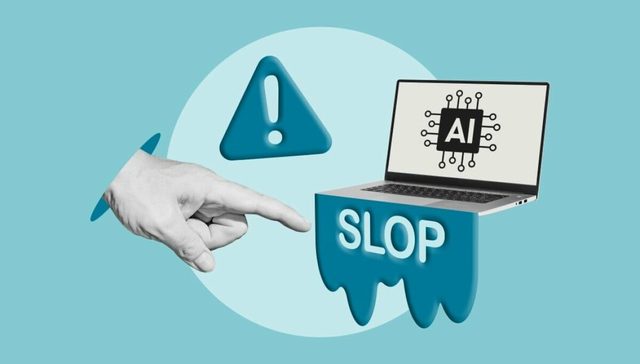
Automated tools are flooding the CVE assignment process with bogus security reports, leveraging the slow response times of NIST. This influx of noise threatens to obscure genuine threats and delays legitimate patching efforts. The situation highlights a growing vulnerability in the supply chain where artificial intelligence exacerbates existing bureaucratic bottlenecks.

  • AI bots are mass-generating fake CVEs to exploit NIST's processing backlog
  • Genuine security alerts risk being drowned out by synthetic noise
  • Manual verification of suspicious entries is now a critical defense
  • Supply chain integrity is compromised by automated report spam

CrowdStrike reports an 89% increase in machine-assisted cyber activity, noting that AI tools are now used both to execute attacks and to defend against them. This escalation has compressed vulnerability remediation windows down to just 48 hours. The trend highlights a rapid shift in the cyber threat landscape where automation dictates the pace of both offense and defense.

  • Expect faster attack cycles requiring immediate response capabilities.
  • Patch windows have collapsed to 48 hours; prioritize critical updates.
  • AI is dual-use in current threat vectors for both offense and defense.
  • Monitor for machine-assisted indicators in threat intelligence feeds.