OffNet Newsroom

Daily topic roundup

Automation / DevOps / IaC

Tuesday, August 04, 2026 · 8 stories, curated & summarized — click any story for the source.

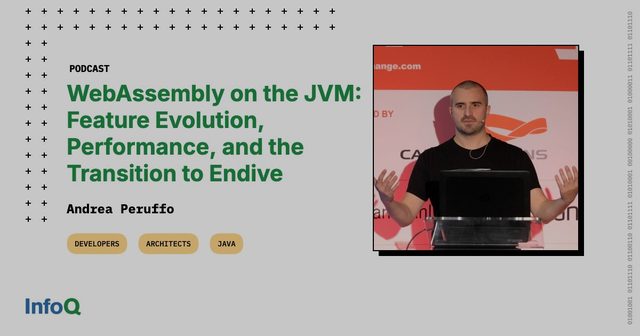
Andrea Peruffo details how WebAssembly is maturing on the server-side JVM, driven by significant performance gains from moving beyond interpreters to efficient JIT compilation. The discussion highlights production-ready applications, specifically focusing on edge computing platforms and modular plugin architectures. This evolution signals a shift toward treating Wasm as a first-class citizen for backend and edge workloads rather than just a browser technology.

  • JVM Wasm runtimes are shifting from interpreters to JIT compilation for production-grade speed.
  • Edge computing and modular plugins are becoming primary real-world deployment targets.
  • The transition to 'Endive' marks a strategic evolution in Wasm infrastructure on JVM.
  • Server-side Wasm is establishing itself as a viable alternative to traditional microservices.
HashiCorp has launched a public beta for a Vault Kubernetes key management plugin that supports the KMS v2 standard. This tool enables Kubernetes API servers to delegate envelope encryption to Vault Enterprise, effectively removing key encryption keys from the cluster. The move shifts the trust domain for protecting etcd data to a separate, governed infrastructure.

  • Enables KMS v2-compatible envelope encryption for Kubernetes clusters
  • Delegates key protection to Vault Enterprise to isolate trust domains
  • Removes key encryption keys from the cluster to reduce attack surface
  • Currently available as a public beta for enterprise evaluation

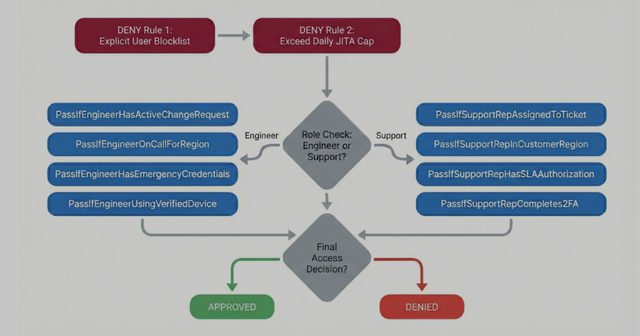
HubSpot has overhauled its Just-In-Time Access authorization system by adopting a rule engine architecture. This new design processes access requests through independent rules structured as a directed acyclic graph. The migration aims to eliminate complex conditional logic in favor of structured decision metadata and rule-level observability.

  • Replaces fragile conditional authorization logic with a structured rule engine.
  • Organizes access rules as a directed acyclic graph for clearer evaluation paths.
  • Adds rule-level observability and governance workflows to the authorization flow.
  • Improves maintainability by decoupling decision logic into independent rules.
Hacker News (100+ points) general

Devtools must be open source

The article argues that developer tools should be open source to ensure transparency and community trust. It highlights the risks of proprietary black-box tools in critical development workflows. The author advocates for open standards and accessible codebases to empower engineers.

  • Proprietary devtools obscure internal logic, creating trust and security risks.
  • Open source tools enable community audits and faster vulnerability patching.
  • Engineers benefit from transparency in how their environments process data.
TRADE-OFFOpen Source vs Proprietary DevtoolsProprietary ToolsObscures internal logicCreates security risksLimits community trustOpen Source ToolsEnables community auditsFaster vulnerability patchingEnsures transparencyvs
Planet PostgreSQL database ↺ since 08-01

PostgreSQL 18 Decouples Extensions from Server Images via GUC

PostgreSQL 18 introduces a new GUC enabling extension control and SQL files to reside outside standard server directories. This change facilitates packaging extensions as independent OCI images, allowing them to be mounted at runtime via Kubernetes ImageVolume or Docker volumes. The approach supports independent versioning and upgrading of extensions without rebuilding the core PostgreSQL server image.

  • PostgreSQL 18 adds a GUC to locate extension files outside server directories.
  • Enables packaging extensions as separate OCI images for runtime mounting.
  • Allows independent extension upgrades without rebuilding the server image.
  • Decoupling effectiveness depends on the specific extension's architecture.
HOW IT WORKSPostgreSQL 18 Extension Decoupling1Define GUC for external paths2Package extensions as OCI images3Mount images at runtime4Upgrade extensions independently
InfoQ generaldevops ↺ since 08-01

Terraform introduces tfpolicy beta for native HCL-based policy-as-code

HashiCorp has launched tfpolicy in public beta within HCP Terraform, offering a new framework for policy-as-code. This tool allows engineers to write governance rules directly in HCL, removing the dependency on external languages and separate enforcement tools. By embedding policy creation into the standard Terraform workflow, HashiCorp aims to streamline infrastructure governance and reduce operational complexity.

  • Native HCL-based policy authoring eliminates need for Rego or other external languages.
  • Public beta now available within HCP Terraform for early adopters.
  • Integrates policy enforcement directly into Terraform workflows for tighter governance.
  • Reduces toolchain sprawl by consolidating infrastructure and policy management.
  • Targeted at simplifying modern infrastructure governance for engineering teams.
AWS What's New awsdatabase ↺ since 08-01

AWS CloudWatch introduces managed Prometheus collectors for EKS, EC2, and more

Amazon CloudWatch now offers fully managed collectors to ingest Prometheus metrics from AWS resources like EKS, EC2, ECS, MSK, and OpenSearch. This feature eliminates the need to deploy and maintain self-managed OpenTelemetry Collector agents. Users simply provide scrape configurations, and CloudWatch handles provisioning, scaling, and metric delivery in OpenTelemetry format.

  • Remove self-managed OpenTelemetry Collector overhead for Prometheus ingestion.
  • Collect metrics from EKS, EC2, ECS, MSK, and OpenSearch seamlessly.
  • Query ingested metrics alongside AWS vended metrics using PromQL.
  • Enable unified alarming, dashboards, and cross-service correlation.
TRADE-OFFManaged vs Self-Managed CollectorsOld WayDeploy agents manuallyManage scaling overheadMaintain infrastructureNew WayFully managed by AWSZero agent maintenanceSeamless metric ingestionvs
Hugging Face Blog llmaiml ↺ since 07-31

Hugging Face: Idle GPUs Are the New Grounded Aircraft

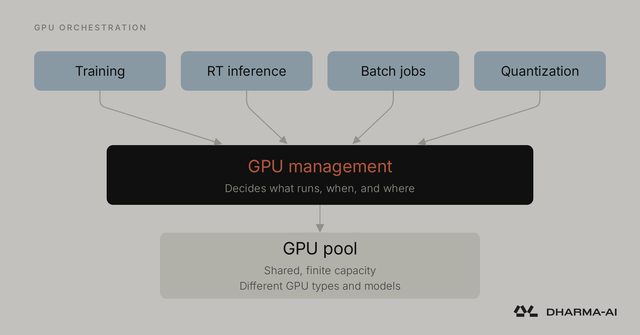
Hugging Face highlights GPU management as a critical operational challenge, drawing parallels between idle compute resources and grounded aircraft. The blog post emphasizes the financial and efficiency losses associated with underutilized hardware in modern AI infrastructure. It advocates for stricter monitoring and automated scheduling to maximize hardware utilization rates.

  • Idle GPUs represent significant wasted capital and operational inefficiency.
  • Automated scheduling is essential to keep compute resources active.
  • Infrastructure teams must treat GPU utilization as a primary KPI.
  • Proactive management prevents the 'grounded aircraft' scenario in AI fleets.