OffNet Newsroom

Daily topic roundup

AI / ML

Monday, November 02, 2026 · 8 stories, curated & summarized — click any story for the source.

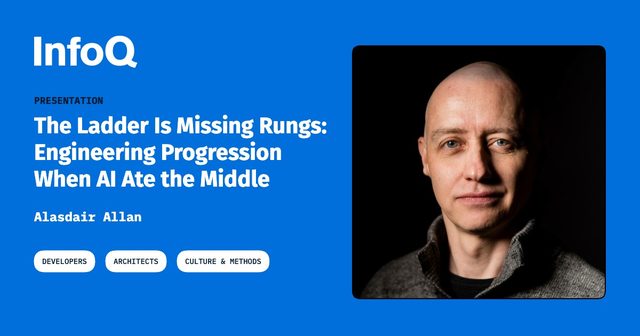
Research from METR and Anthropic highlights a structural risk in software engineering where heavy AI reliance disrupts junior developer skill acquisition. This 'supervision paradox' creates gaps in institutional context and threatens the long-term pipeline of engineers capable of overseeing autonomous systems.

  • Heavy AI reliance disrupts traditional junior developer skill development
  • Institutional context loss risks long-term engineering capability
  • Pipeline threatens future ability to oversee autonomous systems
  • Empirical data from METR and Anthropic supports the paradox
Hacker News (100+ points) general

Tao: Mathematics has changed, let's act like it

Terence Tao argues that the fundamental nature of mathematical practice has shifted. The article calls for the community to adapt to this new reality rather than clinging to outdated methods.

  • Tao signals a paradigm shift in how mathematics is conducted
  • Community norms must evolve to match current mathematical realities
  • Resistance to change may hinder progress in the field

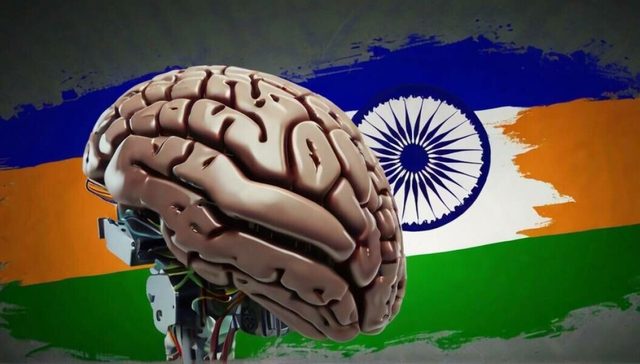
India is introducing an AI strategy that prioritizes data sovereignty by moving models to local data sources instead of centralizing data for training. This approach aims to foster domestic AI development while restricting Big Tech's unrestricted access to sensitive information. The policy shifts the architectural paradigm toward federated or edge-based inference and training.

  • Data sovereignty becomes a primary design constraint for AI deployments in India
  • Federated learning or edge AI patterns will likely gain regulatory and market traction
  • Big Tech vendors face stricter boundaries on data aggregation and model training access
  • Architects must prioritize local data processing capabilities over centralized cloud models
AWS What's New awsdatabase ↺ since 10-31

SageMaker AI adds NVIDIA MIG support for GPU partitioning

Amazon SageMaker AI now enables GPU partitioning for real-time endpoints, leveraging NVIDIA Multi-Instance GPU (MIG) technology. This allows multiple small or mid-size models to share a single physical accelerator by dividing it into isolated partitions with dedicated compute and memory. The feature eliminates the need to dedicate an entire GPU to each model, significantly improving resource utilization for workloads like embeddings and classifiers.

  • Utilizes NVIDIA MIG to split GPUs into up to seven isolated partitions
  • Enables multiple small models to share one physical accelerator
  • Reduces wasted capacity for fine-tuned variants and embedding models
  • Requires hardware-level isolation awareness for endpoint configuration
HOW IT WORKSGPU Partitioning Workflow1Enable NVIDIA MIG support2Divide physical GPU into isolated partitions3Deploy small models to dedicated partitions4Serve multiple endpoints from one…
AWS What's New awsdatabase ↺ since 10-30

SageMaker AI supports SOCI-indexed images for seconds-fast training starts

Amazon SageMaker AI now integrates Seekable OCI (SOCI) indexing to accelerate container startup for training and processing jobs. By lazy-loading images, the system fetches only the files necessary to initialize the container, streaming the remaining data in the background. This approach significantly reduces GPU idle time during image pulls, which is critical for large deep learning images that often exceed 10 GB.

  • Cuts GPU idle time during image pulls by up to 90% for large containers
  • Enables lazy-loading: fetches only essential files to start the container immediately
  • Eliminates minutes of wait time associated with downloading 10GB+ deep learning images
  • Maintains training performance while reducing costs associated with idle instance time
BY THE NUMBERSSageMaker Startup Speedup90%reduction in GPU idle timeFor large deep learning images over 10 GB
InfoQ generaldevops ↺ since 10-31

Netflix frames GPU reliability as distributed systems challenge

Netflix is engineering a reliability platform for large-scale GPU workloads by applying distributed systems principles. The approach combines layered health checks, automated remediation, and fault-tolerant training to maintain job continuity despite hardware failures.

  • Treats GPU infrastructure failures as distributed system events rather than isolated hardware issues
  • Implements layered health checks to detect failures early in the training and inference pipeline
  • Automates remediation processes to reduce manual intervention during hardware faults
  • Uses fault-tolerant training techniques to keep jobs running despite component failures
InfoQ generaldevops ↺ since 10-30

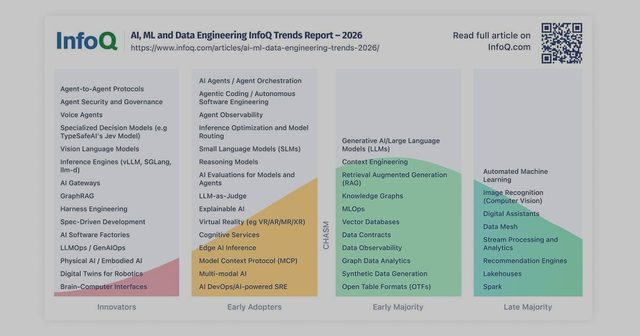
InfoQ releases 2026 AI, ML, and Data Engineering trends report

InfoQ has published its annual trends report covering AI, machine learning, and data engineering for 2026. The document aggregates perspectives from editorial staff and external experts to identify key technologies and shifts expected over the next year.

  • Aggregates editorial and expert views on AI/ML trends for 2026
  • Focuses on data engineering shifts alongside AI developments
  • Provides a 12-month outlook for emerging technologies
  • Authored by Srini Penchikala, Chip Huyen, and others
The Register general ↺ since 11-01

Amazon memo on AI use sparks workforce anxiety

Amazon issued a memo regarding AI usage that has created uncertainty among its employees. The mixed messaging has led to a pessimistic outlook among software engineers regarding their long-term career prospects.

  • Internal guidance on AI adoption is creating confusion and anxiety among Amazon staff
  • Software engineers are expressing concern about the future stability of their roles
  • Mixed signals on AI strategy are impacting morale within the engineering workforce
↑