OffNet Newsroom

Daily topic roundup

AI / ML

Tuesday, October 20, 2026 · 5 stories, curated & summarized — click any story for the source.

arXiv cs.CL researchllm

NVFP4 Training Recipes Validated at 1T Token Scale

Researchers systematically compared NVFP4 training recipes on dense 8B and MoE 30B models up to 1T tokens to determine which techniques are essential for accuracy recovery. The study identifies specific ingredients necessary for stable low-precision pretraining beyond small-scale tests. A final recommended recipe incorporates unbiased gradient estimation and other state-of-the-art methods to match established stable training principles.

  • Validates NVFP4 recipes at medium scale (8B/30B MoE) rather than just toy models
  • Identifies specific necessary ingredients for accuracy recovery in 4-bit training
  • Proposes a recipe using unbiased gradient estimation for stable large-scale runs
  • Addresses the gap between small-scale success and large-scale stability in FP4

CHECKLISTEssential NVFP4 Training IngredientsUse unbiased gradient estimationApply state-of-the-art accuracy recoveryValidate on dense 8B modelsTest MoE 30B stability

Microsoft has withdrawn from a flagship AI supercomputer initiative in Essex due to significant delays in securing power connections. The infrastructure bottlenecks threaten to push back the UK's broader AI capabilities by several years.

  • Power grid constraints are becoming a primary blocker for large-scale AI compute deployments
  • Infrastructure readiness, not just capital, dictates the timeline for national AI projects
  • Delays in energy connectivity could stall AI ambitions until the 2030s
  • Hyperscalers are increasingly sensitive to local utility reliability and speed

Google and Meta have released TorchTPU, an open-source project providing a native PyTorch backend for Google TPUs. The architecture supports both eager execution and torch.compile to deliver competitive performance for training and inference. This update aims to simplify the migration of PyTorch models to TPU infrastructure while maintaining standard developer workflows.

  • Enables native PyTorch execution on TPUs without complex custom code or wrappers
  • Supports both eager mode and torch.compile for flexible development and optimization
  • Delivers industry-competitive performance for both training and inference workloads
  • Simplifies migration of existing PyTorch models to Google TPU hardware
CHECKLISTMigrating to TorchTPUUse native PyTorch execution on TPUsAvoid complex custom code or wrappersSupport eager mode and torch.compileMaintain standard developer workflows
AWS What's New awsdatabase ↺ since 10-17

NVIDIA Nemotron 3.5 Super VL lands on SageMaker JumpStart

NVIDIA’s Nemotron 3.5 Super VL vision-language model is now accessible via Amazon SageMaker JumpStart. This multimodal model processes images, video, and text to generate textual output, targeting use cases like document intelligence and GUI understanding. It features a 120B-parameter hybrid Mixture-of-Experts architecture with 12B active parameters and supports context windows up to 1 million tokens.

  • Deploy multimodal AI on AWS using a hybrid MoE architecture with 12B active parameters
  • Supports 1M token context length for long-document and video analysis tasks
  • Includes Multi-Token Prediction head to accelerate text generation via speculative decoding
  • Optimized for document intelligence, GUI understanding, and video QA workloads
  • Available immediately through SageMaker JumpStart for rapid deployment
BY THE NUMBERSMassive Context Window1millionToken context lengthEnables analysis of long documents and videos
The Register general ↺ since 10-19

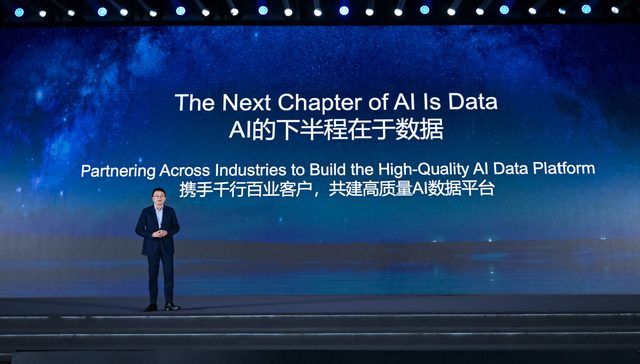
Huawei targets AI inference memory bottleneck with OceanStor M900

Huawei has introduced the OceanStor M900 Context Memory Storage platform to address growing memory constraints in large-scale AI inference. The system is designed to improve the cost-efficiency of serving large models by optimizing how context data is stored and accessed.

  • OceanStor M900 targets memory bottlenecks in large-scale AI inference
  • Platform aims to improve the economics of serving large models
  • Focuses on optimizing context data storage and access patterns
↑