OffNet Newsroom

Archive snapshot

Tuesday, October 20, 2026

Daily signal on databases, AI, and the tech that matters.

30 new today 37 stories 7 sections 10 for the DBA desk

Database Technology 7

roundup ↗

Christophe Pettus details the recovery_end_command GUC, a hook that executes exactly once when a PostgreSQL instance finishes recovery or promotes to primary. The key operational nuance is that the server is in a transitional state during execution: it is neither fully accepting connections nor still in active recovery mode.

  • recovery_end_command runs exactly once at the end of recovery or promotion
  • Server state during execution is transitional: not ready for clients, not recovering
  • Useful for triggering external scripts or notifications at precise lifecycle events
  • Requires careful handling since standard connection protocols may not apply

Fleet impact: For Aurora PostgreSQL and RDS fleets, this hook offers a native way to trigger automation (e.g., DNS updates, monitoring alerts) precisely when a replica promotes. DBAs must verify that scripts invoked by recovery_end_command do not attempt to connect to the database itself, as the server is not yet accepting connections during execution.

HOW IT WORKSRecovery End Command Lifecycle1Recovery completes or promotion starts2recovery_end_command hook triggers3Server enters transitional state4External script executes once5Server fully opens to clients

Pinterest implemented a partition finalization mechanism for its ingestion framework using event time watermarks. The system leverages Apache Flink to track event time and publishes non-regressing watermarks via Apache Iceberg metadata. This approach enables downstream jobs to determine when continuously ingested CDC data is sufficiently complete for processing.

  • Event time watermarks solve the 'when is data complete' problem for streaming ingestion.
  • Apache Iceberg metadata stores non-regressing watermarks to signal partition readiness.
  • Flink tracks event time to generate accurate completeness signals for downstream jobs.
  • This method ensures data integrity for petabyte-scale CDC pipelines before processing.
HOW IT WORKSPetabyte Partition Finalization Flow1Ingest CDC streams2Track event time3Generate non-regressing watermarks4Publish to Iceberg metadata5Signal partition readiness
AWS What's New awsdatabase

RDS SQL Server enables direct snapshots on read replicas

Amazon RDS for SQL Server now allows creating database snapshots directly on read replica instances without requiring promotion to primary. This capability addresses previous limitations where snapshots were restricted to standalone or primary instances, thereby simplifying backup and disaster recovery workflows. By maintaining snapshot data on replicas throughout their lifecycle, the service reduces the time-consuming initial full snapshot required when enabling Multi-AZ on a promoted replica, especially for large storage configurations.

  • Create DB snapshots on read replicas without promoting them to primary first
  • Reduces DR timeline unpredictability caused by long initial snapshots on large volumes
  • Eliminates wait times for full snapshots when converting promoted replicas to Multi-AZ
  • Enhances backup flexibility for complex SQL Server RDS architectures

Fleet impact: For fleets using RDS SQL Server, this feature reduces the operational risk and time associated with promoting read replicas to primary or Multi-AZ configurations. DBAs should update DR runbooks to leverage direct replica snapshots, minimizing the 'cold start' latency on large io2 volumes during failover or architecture changes.

TRADE-OFFSnapshot Workflow ImprovementPrevious MethodPromote replica to primaryWait for full snapshotSlow disaster recovery setupNew CapabilitySnapshot directly on replicaNo promotion requiredFaster Multi-AZ conversionvs

Awide Labs has released Awide Polar, an open-source PostgreSQL fork designed for compute-storage disaggregation and hybrid transactional/analytical processing. The release includes PolarFS for storage management and Polar Proxy to ensure consistent reads across replicas.

  • New open-source PostgreSQL fork targets HTAP workloads via compute-storage separation
  • PolarFS storage layer introduced alongside the core database engine
  • Polar Proxy component provides consistent read capabilities across replica nodes

Fleet impact: DBAs managing Aurora PostgreSQL or RDS fleets should evaluate Awide Polar as a potential open-source alternative for HTAP workloads, checking compatibility with existing PolarFS-style storage architectures and replica consistency requirements.

HOW IT WORKSAwide Polar Architecture1Core PostgreSQL Engine2PolarFS Storage Layer3Compute-Storage Disaggregation4Polar Proxy Consistency

Restoring a pg_dump created on PostgreSQL 17 into a PostgreSQL 16 instance often fails due to the newer transaction_timeout parameter. The article details measured fixes for this specific error and identifies four other common causes of similar configuration mismatches.

  • pg_dump from newer versions may embed parameters unknown to older servers
  • transaction_timeout is a frequent culprit when downgrading from PG 17 to 16
  • Four additional configuration mismatch causes are documented alongside the fix
  • Validate dump compatibility before attempting cross-version restores

Fleet impact: For Aurora PostgreSQL or RDS fleets, ensure dump files match the target engine version to avoid restore failures during disaster recovery or migrations. Audit backup scripts for version-specific parameters like transaction_timeout before attempting downgrades or cross-version restores.

HOW IT WORKSFixing PG Dump Compatibility Errors1Identify unknown configuration parameters2Remove transaction_timeout from dump3Check four other common mismatches4Validate dump before restoring5Restore to older PostgreSQL instance
Planet PostgreSQL database

PostgreSQL connection slots reserved for SUPERUSER

PostgreSQL reserves a configurable number of connection slots exclusively for users with SUPERUSER privileges, triggering errors when non-superusers attempt to connect on a saturated system. This behavior persists across versions 15 through 17 and is controlled by the superuser_reserved_connections parameter.

  • Non-superusers hit connection errors when max_connections is reached due to reserved slots
  • superuser_reserved_connections dictates how many slots are blocked for regular users
  • Verify superuser_reserved_connections value to align with operational access needs
  • Adjusting max_connections or reserved slots requires a configuration reload or restart
  • Monitor active connections to prevent accidental exhaustion of non-reserved slots

Fleet impact: Review superuser_reserved_connections on all Aurora and RDS instances to ensure DBAs retain emergency access during connection storms; consider alerting on total connections approaching max_connections minus reserved slots to prevent application lockouts.

CHECKLISTManaging Superuser Connection SlotsVerify superuser_reserved_connections valueMonitor active connections regularlyReload config after adjusting slotsAlign reserved slots with access needsPrevent exhaustion of non-reserved slots

LLMs 6

roundup ↗
AWS What's New awsdatabase

Grok 4.7 hits Amazon Bedrock in AWS GovCloud (US)

SpaceXAI's Grok 4.7 is now available on Amazon Bedrock within AWS GovCloud (US), targeting coding, agentic workflows, and knowledge work. This update improves mixed-document processing and repo-scale coding reliability with better planning and error recovery. It also enhances browser-use agents for tasks like form filling and portal navigation.

  • Grok 4.7 available in AWS GovCloud (US) via Amazon Bedrock
  • Improved repo-scale coding with planning and error recovery
  • Enhanced browser agents for form fills and portal navigation
  • Supports mixed-document handling for knowledge work
  • Accessible via Bedrock console and supported APIs
HOW IT WORKSGrok 4.7 Workflow Enhancements1Access via Bedrock Console2Process Mixed Documents3Plan Repo-Scale Coding4Execute Browser Tasks5Recover From Errors
Hacker News (100+ points) general

MiniMax Releases M3.1 Flash Model

MiniMax has introduced M3.1 Flash, a new entry in its model lineup. The release has generated significant discussion within the tech community, evidenced by over 460 points and nearly 200 comments on Hacker News.

  • MiniMax launches new model variant M3.1 Flash
  • High community engagement with ~460 HN points
  • Discussion focuses on model capabilities and positioning
GitHub Trending (daily) githubrepos ⚠ unverified date/source

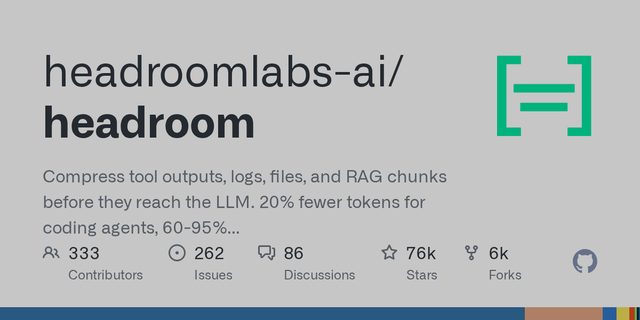
Headroom cuts LLM token costs by compressing agent inputs locally

Headroom is a tool that compresses tool outputs, logs, files, and RAG chunks before they are sent to an LLM. It claims to reduce token usage by 20% for coding agents and up to 95% for JSON data while preserving answer quality. The compression logic runs locally on your machine, ensuring no raw data leaves your environment.

  • Reduces token costs by compressing inputs like logs, files, and RAG chunks before LLM processing
  • Offers library, proxy, and MCP server integration for Python and TypeScript environments
  • Claims 20% token savings for coding agents and 60-95% for JSON structures without loss of accuracy
  • Executes compression locally to maintain data privacy and prevent external transmission of raw content

Google has released EmbeddingGemma 2, an open-weight multimodal model built on the Gemma 4 architecture. Licensed under Apache 2.0, this compact model extends semantic capabilities beyond text to include code, images, video, and audio. It is specifically engineered to optimize retrieval-augmented generation workflows and support efficient on-device deployment.

  • Apache 2.0 license enables commercial use and integration without restrictive terms
  • Multimodal support covers code, images, video, and audio alongside standard text
  • Compact architecture targets efficiency for on-device and edge deployment scenarios
  • Designed to enhance semantic search and RAG pipeline performance

All US federal civilian agencies have issued orders prohibiting the use of the Chinese AI service DeepSeek. The directive is characterized by its broad scope and lack of specific technical guidelines, creating ambiguity for security teams. This move effectively shuts down access to the model within the federal civilian sector.

  • DeepSeek is now prohibited across all US federal civilian agencies
  • The ban order is broad and lacks specific technical compliance details
  • Vague directives create operational ambiguity for security and engineering teams
  • Federal compliance now explicitly excludes this specific Chinese AI service

Context-to-LoRA techniques compress documents into low-rank parameter updates to bypass long-context decoding, but existing methods struggle with fact retention and instruction adherence. Cache2LoRA addresses these limitations by using the specific query to aggregate evidence from a frozen document cache before generating the LoRA update. This approach improves the recovery of targeted facts and ensures answers remain aligned with response instructions.

  • Existing context-to-LoRA methods fail to reliably preserve facts or follow response instructions
  • Cache2LoRA uses query-specific evidence aggregation from a frozen cache to generate updates
  • Separating fact discrimination from target retention reveals key failure modes in prior work
  • Query-aware aggregation improves fact recovery without increasing update size
  • Instruction adherence requires explicit optimization beyond mere fact retrieval
HOW IT WORKSCache2LoRA Process Pipeline1Receive specific user query2Aggregate evidence from frozen cache3Generate low-rank parameter update4Apply update for internalization

AI / ML 5

roundup ↗
arXiv cs.CL researchllm

NVFP4 Training Recipes Validated at 1T Token Scale

Researchers systematically compared NVFP4 training recipes on dense 8B and MoE 30B models up to 1T tokens to determine which techniques are essential for accuracy recovery. The study identifies specific ingredients necessary for stable low-precision pretraining beyond small-scale tests. A final recommended recipe incorporates unbiased gradient estimation and other state-of-the-art methods to match established stable training principles.

  • Validates NVFP4 recipes at medium scale (8B/30B MoE) rather than just toy models
  • Identifies specific necessary ingredients for accuracy recovery in 4-bit training
  • Proposes a recipe using unbiased gradient estimation for stable large-scale runs
  • Addresses the gap between small-scale success and large-scale stability in FP4
CHECKLISTEssential NVFP4 Training IngredientsUse unbiased gradient estimationApply state-of-the-art accuracy recoveryValidate on dense 8B modelsTest MoE 30B stability

Microsoft has withdrawn from a flagship AI supercomputer initiative in Essex due to significant delays in securing power connections. The infrastructure bottlenecks threaten to push back the UK's broader AI capabilities by several years.

  • Power grid constraints are becoming a primary blocker for large-scale AI compute deployments
  • Infrastructure readiness, not just capital, dictates the timeline for national AI projects
  • Delays in energy connectivity could stall AI ambitions until the 2030s
  • Hyperscalers are increasingly sensitive to local utility reliability and speed

Google and Meta have released TorchTPU, an open-source project providing a native PyTorch backend for Google TPUs. The architecture supports both eager execution and torch.compile to deliver competitive performance for training and inference. This update aims to simplify the migration of PyTorch models to TPU infrastructure while maintaining standard developer workflows.

  • Enables native PyTorch execution on TPUs without complex custom code or wrappers
  • Supports both eager mode and torch.compile for flexible development and optimization
  • Delivers industry-competitive performance for both training and inference workloads
  • Simplifies migration of existing PyTorch models to Google TPU hardware
CHECKLISTMigrating to TorchTPUUse native PyTorch execution on TPUsAvoid complex custom code or wrappersSupport eager mode and torch.compileMaintain standard developer workflows
AWS What's New awsdatabase ↺ since 10-17

NVIDIA Nemotron 3.5 Super VL lands on SageMaker JumpStart

NVIDIA’s Nemotron 3.5 Super VL vision-language model is now accessible via Amazon SageMaker JumpStart. This multimodal model processes images, video, and text to generate textual output, targeting use cases like document intelligence and GUI understanding. It features a 120B-parameter hybrid Mixture-of-Experts architecture with 12B active parameters and supports context windows up to 1 million tokens.

  • Deploy multimodal AI on AWS using a hybrid MoE architecture with 12B active parameters
  • Supports 1M token context length for long-document and video analysis tasks
  • Includes Multi-Token Prediction head to accelerate text generation via speculative decoding
  • Optimized for document intelligence, GUI understanding, and video QA workloads
  • Available immediately through SageMaker JumpStart for rapid deployment
BY THE NUMBERSMassive Context Window1millionToken context lengthEnables analysis of long documents and videos
The Register general ↺ since 10-19

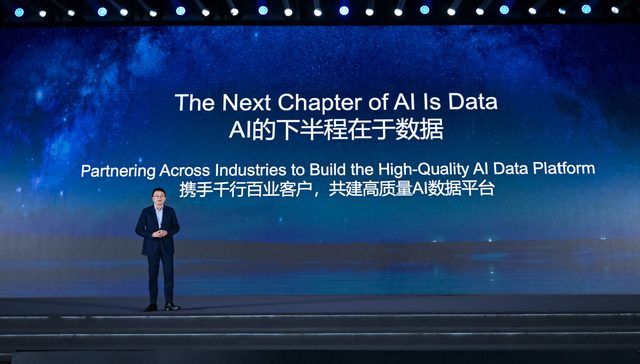
Huawei targets AI inference memory bottleneck with OceanStor M900

Huawei has introduced the OceanStor M900 Context Memory Storage platform to address growing memory constraints in large-scale AI inference. The system is designed to improve the cost-efficiency of serving large models by optimizing how context data is stored and accessed.

  • OceanStor M900 targets memory bottlenecks in large-scale AI inference
  • Platform aims to improve the economics of serving large models
  • Focuses on optimizing context data storage and access patterns

Agentic AI 8

roundup ↗
AWS Database Blog awsdatabase

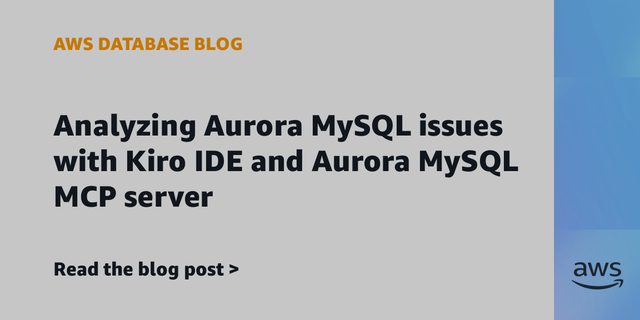
Diagnose Aurora MySQL issues via Kiro IDE and MCP server

AWS introduces a workflow combining Kiro IDE with an Aurora MySQL MCP server to troubleshoot database problems using natural language. This setup enables engineers to investigate deadlocks and high IOPS spikes by prompting the AI, which automates the root cause analysis process. The approach aims to replace lengthy manual diagnostics with rapid, guided investigations.

  • Integrates Aurora MySQL MCP server directly into Kiro IDE for context-aware debugging
  • Converts natural language queries into actionable diagnostic steps for deadlocks and IOPS
  • Reduces reliance on deep DBA expertise for initial triage of common performance issues
  • Shifts root cause analysis from hours of manual log review to minutes of AI-guided interaction

Fleet impact: For Aurora MySQL fleets, this tool can accelerate incident response for deadlock and IOPS events by automating log correlation and query analysis. DBAs should evaluate its accuracy in complex RAC-like scenarios or multi-tenant environments before integrating it into standard on-call runbooks.

Maxwell introduces a hardware-native agent that applies runtime optimizations to inefficient code. This approach aims to improve performance without requiring developers to rewrite application logic manually.

  • Hardware-level agent optimizes code at runtime
  • Reduces need for manual code refactoring
  • Targets performance gains for sub-optimal implementations
  • Integrates directly with underlying hardware

This paper investigates whether agentic AI architectures are superior to traditional protocols like REST, SOAP, and MCP for automating business tasks. The authors compare seven methods on a controlled arithmetic benchmark to evaluate trade-offs in development speed, performance, and cost. The study aims to clarify when the complexity of agents is justified compared to established alternatives.

  • Compares agentic AI against REST, SOAP, and MCP on a 1,000-expression arithmetic benchmark
  • Evaluates trade-offs between development speed, runtime performance, and operational cost
  • Challenges the assumption that agents are universally preferable for automation tasks
  • Provides empirical data on when simpler architectures may outperform agentic systems
TRADE-OFFAgentic AI vs Traditional ProtocolsAgentic AIHigher development complexityPotentially slower runtimeIncreased operational costREST and SOAPFaster development speedPredictable performance metricsLower infrastructure overheadvs

Researchers demonstrate that LLM agent susceptibility to prompt injections is not fully determined at the moment malicious content is ingested. Using branching rollouts to replay episodes and resample subsequent steps, they isolate variance attributable to post-read reasoning. While non-thinking agents are largely compromised upon reading, enabling chain-of-thought reasoning shifts significant outcome variance to later decision steps, challenging the efficacy of static read-time monitors.

  • Prompt injection outcomes are not fixed at ingestion; post-read reasoning significantly influences agent behavior
  • Enabling chain-of-thought reasoning increases the share of outcome variance determined after reading malicious content
  • Static runtime monitors at ingestion time are insufficient for agents using extended reasoning modes
  • Branching rollout methodology effectively separates read-time vulnerability from reasoning-time susceptibility
TRADE-OFFWhere Injection Risk LivesNon-Thinking AgentsCompromised upon readingVariance fixed at ingestionStatic monitors work wellChain-of-Thought AgentsRisk shifts to reasoningOutcome variance happens laterRead-time monitors failvs

The evolution from microservices to agentic AI architectures marks a transition from decomposing functions to decomposing decisions. This shift fundamentally alters distributed system design, introducing new challenges in observability and reliability. Engineers must adopt updated architectural patterns to manage the complexities of autonomous decision-making layers.

  • Shift focus from functional decomposition to decision decomposition
  • Agentic systems introduce new observability and reliability challenges
  • Traditional microservices patterns may not suffice for agentic AI
  • Requires updated architectural practices for distributed agent coordination
Hacker News (100+ points) general

Meta engineer highlights discomfort with AI-generated black-box code

A Meta engineer describes the growing unease among developers who ship AI-generated code without fully comprehending its internal logic. The rapid pace of AI-assisted development makes line-by-line verification impractical, forcing engineers to rely on high-level understanding rather than detailed code mastery. This shift conflicts with traditional engineering instincts that prioritize deep system knowledge.

  • Line-by-line review of AI code is becoming time-prohibitive at scale
  • Engineers are accepting high-level understanding over detailed code mastery
  • Traditional instincts about code ownership clash with AI-assisted workflows
  • Black-box AI outputs are normalizing despite reduced transparency
TRADE-OFFTraditional Instincts vs AI RealityTraditional EngineeringDeep system knowledge requiredLine-by-line code masteryFull code ownershipAI-Assisted WorkflowHigh-level understanding onlyLine-by-line review impracticalBlack-box acceptancevs

Researchers introduce Software World, a framework simulating multi-agent collaboration within realistic Python ecosystems. The system generates environments of interdependent packages where agents autonomously discover tasks and coordinate to improve software efficiency. This approach tests how agent teams scale inference-time compute through cooperative problem-solving.

  • Simulates realistic multi-agent workflows using interdependent Python package environments
  • Agents autonomously identify tasks and collaborate without predefined coordination protocols
  • Framework evaluates collective agent performance on software efficiency goals
  • Explores scaling inference-time compute through agent team structures
HOW IT WORKSAgent Collaboration Pipeline1Generate interdependent Python packages2Agents autonomously discover tasks3Coordinate without predefined protocols4Improve software efficiency collectively5Scale inference-time compute resources
arXiv cs.AI researchai

Cortex: Fixed-Point Theory for Governed Coding Agents

Researchers introduce Cortex, a supervisory layer for coding agents that enforces pre-execution governance and iterative repair. The paper formalizes requirement closure using finite lattice theory, proving that exhaustive iteration converges to a least fixed point under sound, monotone validation rules. It also provides stochastic bounds for completion time, though these guarantees rely on strict assumptions regarding validation fallibility and execution limits.

  • Formalizes coding agent governance via finite lattice theory for requirement closure
  • Proves convergence to least fixed point with bounded strict increases per requirement
  • Offers stochastic bounds for completion time under uniform positive-progress assumptions
  • Highlights critical dependencies on validation soundness and execution constraints
HOW IT WORKSCortex Governance Loop1Propose code change2Validate against requirements3Identify closure gaps4Repair and iterate5Converge to fixed point

Automation / DevOps / IaC 5

roundup ↗

Research from Terra indicates a significant uptick in GitHub security fixes that fail or introduce new vulnerabilities within 90 days of release. This trend is attributed to attackers leveraging AI to rapidly identify and exploit weaknesses in patch implementations.

  • Monitor patch regressions closely; initial fixes may introduce new vulnerabilities
  • AI accelerates the discovery of flaws in recently released security patches
  • Implement rigorous post-patch validation and rollback strategies
  • Expect shorter windows for patch stability in high-risk environments

Microsoft's October updates for Exchange Server have caused significant regressions, specifically breaking Outlook Web Access (OWA) and triggering severe email backlogs on high-volume systems. Administrators report spending entire weekends remediating these issues after a default server setting was altered during the patch process. The disruption highlights the risks of automatic default changes in critical communication infrastructure.

  • October Exchange updates broke Outlook Web Access (OWA) functionality
  • Busy servers experienced lengthy email queues due to a default setting change
  • Admins faced weekend-long remediation efforts to restore service
  • Review default configuration changes in Exchange patch notes before deploying
AWS What's New awsdatabase ↺ since 10-17

AWS Lambda durable functions now live in GovCloud US Regions

AWS has expanded Lambda durable functions to GovCloud (US-West and US-East), enabling compliant orchestration of multi-step workflows for government and regulated sectors. These functions introduce checkpointing and wait primitives that allow state persistence and automatic failure recovery without continuous compute billing. This update supports complex AI and order-processing tasks while adhering to strict security mandates.

  • Durable functions available in GovCloud (US-West/East) for regulated workloads
  • New 'step' and 'wait' primitives enable state checkpointing and pausing
  • Automatic recovery from failures without incurring compute charges during waits
  • Supports complex AI workflows and order processing under compliance constraints
HOW IT WORKSDurable Function Lifecycle1Execute step logic2Checkpoint state automatically3Wait for external event4Resume without compute billing5Recover from failures
AWS What's New awsdatabase ↺ since 10-16

AWS Lambda Durable Execution SDK for Go hits GA

AWS has released the general availability of the Durable Execution SDK for Go, allowing developers to build long-running, resilient workflows directly within Lambda. The SDK automates progress checkpointing and supports pausing execution for up to a year while waiting for external events. This enables Go-native implementation of complex multi-step processes, such as deployment pipelines with human-in-the-loop approval gates, without custom state management code.

  • Eliminates need for custom progress tracking in long-running Go workflows
  • Supports pausing execution for up to one year on external events
  • Enables native Go implementation of human-in-the-loop approval gates
  • Simplifies building resilient infrastructure automation and AI pipelines
HOW IT WORKSDurable Execution Workflow Steps1Start Go Lambda function2Checkpoint progress automatically3Pause for external events4Wait up to one year5Resume with human approval
InfoQ generaldevops ↺ since 10-19

Buildkite adds pipeline-scoped secrets and MCP diagnostic tools

Buildkite has released pipeline-scoped secrets to tighten access control within CI workflows. The update also integrates Model Context Protocol tools that allow agents to validate pipelines, diagnose build failures, and repair webhooks. Additionally, the platform now supports Linux arm64 in its GitHub Actions compatibility layer and expanded OpenTelemetry metrics in Agent v4.1.0.

  • Pipeline-scoped secrets limit credential exposure to specific workflow contexts
  • New MCP tools enable automated pipeline validation and failure diagnosis
  • Linux arm64 support extends GitHub Actions compatibility to ARM infrastructure
  • Agent v4.1.0 delivers deeper OpenTelemetry observability for CI runs

AWS 5

roundup ↗

Hugging Face has introduced TorchNeuron to streamline the execution of its models on AWS Trainium hardware. The update aims to reduce the engineering friction associated with running transformer architectures on this specialized silicon.

  • New tooling lowers the barrier to entry for AWS Trainium users
  • Reduces integration complexity for Hugging Face models on Trainium
  • Targets performance and ease-of-use for cloud-native AI workloads
AWS What's New awsdatabase

CloudWatch Omni expands to eight new AWS Regions

Amazon CloudWatch Omni, the AI-driven observability platform, is now accessible in eight additional AWS Regions. This tool integrates OpenTelemetry standards with CloudWatch infrastructure to provide a unified view of application and agent performance. It enables cross-cloud telemetry aggregation across AWS, Azure, and GCP through a centralized interface or IDE extensions.

  • Enables cross-cloud telemetry visibility for AWS, Azure, and GCP environments
  • Combines OpenTelemetry interoperability with CloudWatch scalability
  • Offers dual access via standalone web portal and local IDE extensions
  • Automatically discovers services and maps dependencies across accounts
  • Supports natural language interaction for troubleshooting and metric analysis
CHECKLISTKey Features of CloudWatch OmniEnables cross-cloud telemetry visibilityCombines OpenTelemetry with CloudWatch scalabilityOffers dual access via web portal and IDEAutomatically discovers services and maps dependenciesSupports natural language for troubleshooting

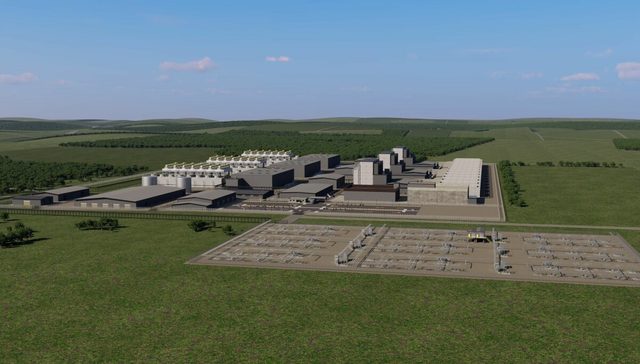
Amazon has announced plans to power its Indiana data centers with nuclear energy supplied by partner X-energy. However, X-energy has not yet completed or operated a single functional reactor, leaving the technology unproven at scale. The commitment remains vague regarding timelines and specific technical milestones.

  • Partner X-energy has zero working reactors to date
  • Nuclear tech powering Indiana DCs is unproven at scale
  • Commitment lacks specific technical milestones or timelines
  • Energy sourcing relies on future, unvalidated infrastructure

A new report argues that Europe's cloud sovereignty regulations may inadvertently benefit specific national vendors while hindering broader pan-European cloud initiatives. The analysis suggests these policies could fragment the market rather than create a unified sovereign infrastructure.

  • Sovereignty mandates may skew competition toward selected national providers
  • Pan-European cloud services face potential regulatory headwinds
  • Policy goals risk conflicting with market consolidation and scale
  • Fragmentation could reduce efficiency for cross-border deployments
InfoQ generaldevops ↺ since 10-18

AWS to disconnect European Sovereign Cloud from global backbone for hours

AWS plans to operate its European Sovereign Cloud in isolation on October 24, severing links to the global network backbone. The exercise relies exclusively on EU-resident staff and local infrastructure to demonstrate autonomy. While AWS deems the disconnected components non-critical, the industry remains split on whether this validates the sovereignty claims customers seek.

  • Isolation test scheduled for Oct 24 removes global backbone connectivity
  • Operation restricted to EU-resident personnel and local hardware/software
  • AWS claims severed systems are non-critical to core operations
  • Practitioners debate if this proves true sovereignty or just network partition

Oracle Ecosystem 1

roundup ↗
AWS What's New awsdatabase ↺ since 10-16

Oracle Database@AWS adds aggregate and default route support for peering

Oracle Database@AWS now permits advertising aggregate CIDRs and default routes during ODB peering configuration. This change removes the previous requirement to list every individual network CIDR, allowing a single route to cover all connected networks via Transit Gateway. The update significantly reduces manual routing maintenance when extending VPCs or on-premises environments.

  • Eliminates manual CIDR updates for each new VPC or on-prem network
  • Supports default 0.0.0.0/0 routes for simplified broad connectivity
  • Reduces operational overhead for Transit Gateway-integrated architectures
  • Enables single aggregate route to cover all reachable networks

Fleet impact: For ExaCC/RAC and Aurora fleets on ODB, this simplifies network scaling by allowing default or aggregate routes instead of granular CIDR lists. Check your current ODB peering configs to leverage this for easier Transit Gateway integration and reduced change management risk.

WORTH QUOTINGThe gist“Oracle Database@AWS now permits advertising aggregate CIDRsand default routes during ODB peering configuration.— AWS What's New
↑