OffNet Newsroom

Daily topic roundup

AWS

Sunday, September 20, 2026 · 8 stories, curated & summarized — click any story for the source.

AWS What's New awsdatabase ↺ since 09-19

Amazon ECS Express Mode adds ARM64 Graviton support

Amazon ECS Express Mode now allows specifying ARM64 as the CPU architecture, enabling direct deployment of ARM-based container images on Graviton instances. This update simplifies the launch of containerized applications by handling networking, load balancing, and auto-scaling while offering up to 40% better price-performance than x86 alternatives. Users can now select the compute architecture that best fits their workload requirements without manual infrastructure configuration.

  • Deploy ARM64 container images directly via ECS Express Mode on Graviton compute.
  • Achieve up to 40% improved price-performance compared to x86-based instances.
  • Automated orchestration includes networking, load balancing, and auto-scaling.
  • Select compute architecture to match specific workload needs easily.
  • No manual infrastructure setup required for rapid application launch.
BY THE NUMBERSGraviton Price Performance Gain40%Better price performance vs x86ARM64 Graviton instances in ECS Express Mode
AWS What's New awsdatabase ↺ since 09-18

AWS GA for T8i: 6th Gen Intel Xeon 6 burstable instances

AWS has released Amazon EC2 T8i instances, a new generation of low-cost burstable compute powered by custom sixth-generation Intel Xeon 6 processors. Built on the latest AWS Nitro cards, these instances offer up to 30% better price performance and up to 70% higher compute performance compared to previous T3 generations. They are available in nano, micro, small, and medium sizes, targeting workloads with low to moderate CPU utilization such as small databases, CI/CD pipelines, and microservices.

  • T8i uses custom 6th Gen Intel Xeon 6 processors on AWS-exclusive Nitro hardware for improved efficiency.
  • Up to 30% better price performance and 70% higher compute than T3 instances.
  • Available in nano, micro, small, and medium sizes for cost-sensitive, low-to-moderate CPU workloads.
  • Offers 1.25x network bandwidth and 2.4x EBS bandwidth compared to predecessors.
  • Ideal for small databases, batch processing, event-driven functions, and CI/CD pipelines.
COMPARISONT8i Performance Gains Over T3Price Performance30%Compute Performance70%
AWS What's New awsdatabase ↺ since 09-19

Amazon S3 Express One Zone expands to 7 new global regions

AWS has enabled S3 Express One Zone in seven additional regions, including Singapore, Sao Paulo, N. California, Canada Central, Paris, Sydney, and Seoul. This single-Availability Zone storage class provides consistent single-digit millisecond latency for latency-sensitive workloads. It offers up to 10x faster data access and 80% lower request costs compared to S3 Standard. The service is optimized for machine learning training, interactive analytics, and AI search engine caching.

  • S3 Express One Zone is now live in 7 more global regions for low-latency needs.
  • Delivers single-digit millisecond access with up to 10x speed over S3 Standard.
  • Request costs drop by up to 80% compared to the standard storage class.
  • Ideal for ML training, interactive analytics, and key-value caching in AI apps.
TRADE-OFFS3 Express vs StandardS3 StandardHigher request costs baselineStandard data access speedS3 Express One ZoneUp to 10x faster accessUp to 80% lower costsvs
InfoQ generaldevops ↺ since 09-19

AWS Lambda extends function timeout to 90 minutes on Managed Instances

AWS Lambda now supports up to 90-minute execution times for functions running on Lambda Managed Instances, a sixfold increase from the previous 15-minute cap. This change targets long-running batch processes while keeping the timeout unchanged for standard synchronous request invocations. The update further blurs the distinction between serverless function invocations and traditional persistent servers.

  • Lambda Managed Instances now support 90-minute timeouts, up from 15 minutes.
  • Standard synchronous request invocations remain limited to the original timeout.
  • Enables serverless handling of long-running batch and ETL workloads.
  • Reduces need to offload long tasks to EC2 or container services.
InfoQ generaldevops ↺ since 09-18

Karmada Multi-Cluster Kubernetes Project Reaches CNCF Graduation

The CNCF announced in September 2026 that Karmada has graduated, achieving the foundation's highest maturity tier. This project specializes in multi-cluster and multi-cloud Kubernetes orchestration. The graduation signifies that Karmada is now considered stable and production-ready for widespread adoption.

  • Karmada now holds CNCF's highest maturity level, indicating long-term stability.
  • The project enables orchestration across multiple Kubernetes clusters and cloud providers.
  • Graduation status makes Karmada a safer choice for enterprise multi-cloud strategies.
The Register general ↺ since 09-18

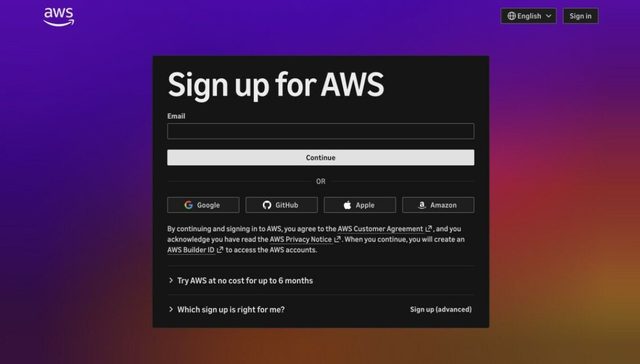
AWS tweaks console signup for AI builders to mask complexity

Amazon Web Services has updated its onboarding flow specifically for new AI developers, aiming to reduce initial friction. The revised experience simplifies the interface to hide underlying architectural complexity and introduces a spending cap by default. This change targets a smoother entry point for users who may be overwhelmed by the full breadth of AWS services.

  • New AI-focused signup flow reduces initial configuration steps
  • Spending cap applied by default to mitigate surprise costs
  • Complexity abstraction may obscure underlying service dependencies
  • Targets lower barrier to entry for AI/ML practitioners

AWS Resilience Hub has introduced three new features to help platform and SRE teams assess workload resilience. The update allows users to scope service inputs using existing EKS namespace labels, providing dependency insights for better visibility, and enables sharing resilience policies across organizations via AWS Organizations. These additions integrate with existing capabilities like automated dependency discovery and generative AI failure analysis.

  • Scope service inputs in Resilience Hub using EKS namespace labels instead of manual ARN lists.
  • Gain deeper visibility into workload resilience through new dependency insights.
  • Standardize and share resilience policies across multiple AWS accounts using AWS Organizations.
CHECKLISTNew Resilience Hub CapabilitiesScope service inputs using EKS namespace labelsGain visibility via new dependency insightsShare policies across orgs with AWS Organizations
AWS What's New awsdatabase ↺ since 09-19

Amazon Keyspaces GA in 11 new Regions for lower latency and data residency

Amazon Keyspaces, the managed serverless service compatible with Apache Cassandra, has reached general availability in 11 additional AWS Regions. This expansion enables customers to deploy Cassandra-compatible applications closer to end-users, reducing latency while ensuring data remains within specific geographic boundaries to satisfy residency mandates. As a serverless offering, it provides virtually unlimited throughput and storage, charging only for the resources consumed.

  • Keyspaces is now GA in 11 new regions, expanding geographic coverage for Cassandra workloads.
  • New regions help meet strict data residency requirements by keeping data within local boundaries.
  • Serverless architecture scales automatically to handle thousands of requests per second without provisioning.
  • Cost model remains pay-per-use, covering both throughput and storage consumption efficiently.
BY THE NUMBERSNew AWS Regions for Keyspaces11Expanded geographic coverageEnables lower latency and data residency
↑