OffNet Newsroom

Archive snapshot

Sunday, September 20, 2026

Daily signal on databases, AI, and the tech that matters.

21 new today 44 stories 8 sections 13 for the DBA desk

Database Technology 8

roundup ↗

Christophe Pettus explains that PostgreSQL's parallel worker parameters often mislead administrators. max_parallel_workers_per_gather acts as a cap on requests per plan node, with the planner typically requesting fewer. Meanwhile, max_parallel_workers is a cluster-wide limit enforced by comparison logic, not the name implies.

  • max_parallel_workers_per_gather limits requests per node, not actual usage.
  • The planner usually requests fewer workers than the maximum allowed.
  • max_parallel_workers is a cluster-wide limit enforced via comparison.
  • Review these GUCs to avoid assuming they control exact worker counts.

PostgreSQL handles row locking for commands like SELECT FOR UPDATE by storing the locking transaction ID in t_xmax and setting flags in t_infomask. This approach circumvents the max_locks_per_transaction limit on the shared memory lock table, which would otherwise be exhausted by locking large numbers of rows. Consequently, readers can still see the row while it is locked, allowing the system to scale locking operations beyond shared memory constraints.

  • Row locks are stored in the tuple header (t_xmax) rather than shared memory.
  • This design prevents hitting max_locks_per_transaction limits during bulk operations.
  • Readers retain visibility of locked rows, maintaining MVCC consistency.
  • SELECT FOR UPDATE and foreign key checks use this mechanism automatically.
Planet PostgreSQL database

pg_acm gets major update with bug fixes and new functions

Henrietta Dombrovskaya has released significant updates to the pg_acm extension, addressing bugs she identified after leaving DRW. The update includes several requested new functions and conceptual improvements to the tool's core logic. While the code is now published, the author notes that comprehensive documentation is still pending.

  • pg_acm receives critical bug fixes and new function additions.
  • Conceptual changes improve the extension's underlying logic.
  • Documentation is currently incomplete despite code release.
  • Updates stem from post-DRW development backlog.
CHECKLISTpg_acm Update Key PointsCritical bug fixes appliedNew functions addedCore logic improvedDocumentation pending
AWS Database Blog awsdatabase ↺ since 09-18

AWS ElastiCache Valkey + Aurora PostgreSQL: Correctness-Safe Bloom Filters

This AWS blog post details a three-tier architecture combining Amazon ElastiCache for Valkey, an exact-match cache, and Amazon Aurora PostgreSQL to perform membership lookups. By layering a Bloom filter with strict verification against the relational source of truth, the pattern eliminates false-positive risks inherent in probabilistic structures. The design achieves sub-millisecond decision times at peak throughput while ensuring data correctness.

  • Use Valkey for high-speed probabilistic filtering before hitting Aurora PostgreSQL
  • Always verify Bloom filter hits against an exact-match layer to prevent false positives
  • Architect for sub-millisecond latency without compromising data integrity guarantees
  • Leverage this pattern for high-throughput membership queries in read-heavy workloads

Fleet impact: For Aurora PostgreSQL and ElastiCache fleets, this pattern offers a robust way to offload high-volume membership checks while maintaining strict consistency. Ensure your Valkey instances are sized for the filter load and that the exact-match fallback path remains performant under peak concurrency.

HOW IT WORKSCorrect-By-Design Lookup Pipeline1Check Valkey Bloom Filter2Verify Exact Match3Return Aurora Data
Planet PostgreSQL database ↺ since 09-19

PgBouncer transaction mode leaks tenant data to AI agents via MCP

A PostgreSQL agent using the MCP protocol can inadvertently read another tenant’s data when connecting through PgBouncer in transaction mode. This occurs because the pooled connection retains session state from a previous client, bypassing the expected isolation. The issue highlights a critical flaw in relying on session variables for multi-tenant isolation when using connection pooling.

  • PgBouncer transaction mode reuses connections without resetting session state
  • MCP protocol lacks inherent session isolation for agent tool calls
  • RLS policies reading session vars are vulnerable to connection reuse
  • Agents may access unauthorized tenant data via pooled connections
  • Reset session state explicitly before each transaction or tool call
HOW IT WORKSTenant Data Leakage Path1Tenant A sets session var2PgBouncer reuses pooled connection3Tenant B connects via MCP4Agent reads stale Tenant A data
Planet PostgreSQL database ↺ since 09-17

PostgreSQL 19 Delayed: Major Feature Reversions and Scope Cuts

PostgreSQL 19 will miss its expected fall release window due to a heavy review cycle and significant feature reversions during beta. The development team is prioritizing quality over the original timeline, reducing the release scope to stabilize the codebase. Beta 4 is scheduled for September 24, 2026, with the final release pushed back by weeks or potentially months.

  • Postgres 19 is delayed beyond the traditional fall release schedule.
  • Major features reverted during beta to maintain code quality.
  • Release scope is being reduced to meet stability requirements.
  • Beta 4 is set for September 24, 2026, with final release pending.
  • Expect weeks to months of delay before the official launch.
HOW IT WORKSPostgreSQL 19 Delay Timeline1Beta 4 on September 24, 20262Heavy review cycle and reversions3Stability stabilization phase4Final release weeks or months later
Planet PostgreSQL database ↺ since 09-17

PostgreSQL 19 Reverts 74 Commits Including Online Checksum Transition

The PostgreSQL 19 stable branch saw 71 commits in its final week, but this was offset by 74 reverts across six separate pull requests. The most significant revert involves the online data checksum transition feature, which was pulled by Daniel Gustafsson on September 16. This reflects a conservative stabilization approach as the release window closed.

  • PostgreSQL 19 stabilized with a net positive of 71 commits after reverting 74 changes.
  • Online data checksum transition was removed from v19, likely due to stability concerns.
  • Six features remain tracked for inclusion, with two still actively shipping.
  • PostgreSQL 20 master branch received 46 commits in the same reporting window.
THE SHIFTPostgreSQL 19 Net Commit Change74REVERTED COMMITS71FINAL COMMITSNet negative stabilization

LLMs 8

roundup ↗
Hacker News (100+ points) general

Researchers Demonstrate Weight Exfiltration via Side Channels

A new study reveals that large language model weights can be extracted from cloud inference endpoints using timing side channels. The attack exploits subtle latency variations in the model's response generation to reconstruct the underlying parameter data. This method bypasses traditional API access controls by leveraging the physical execution characteristics of the hardware.

  • Timing side channels can leak proprietary model weights even with secure APIs.
  • Physical execution latency correlates with specific model parameter access patterns.
  • Current API rate limiting and access controls do not mitigate this extraction vector.
  • Model providers should evaluate hardware-level noise and jitter as defense mechanisms.
  • High-value models may need obfuscation or noise injection to prevent reconstruction.
HOW IT WORKSWeight Extraction Pipeline1Invoke cloud inference endpoint2Measure response latency3Correlate timing with parameters4Reconstruct model weights
Google AI Blog aillm

Google expands AI & Economy team with new experts

Google has announced the addition of new researchers to its AI and Economy team. This expansion aims to deepen the organization's research into the economic impacts of artificial intelligence. The move signals a continued focus on understanding how AI technologies influence broader economic systems.

  • Google is scaling its internal research capacity for AI economics
  • New hires suggest a focus on long-term economic impact analysis
  • No immediate technical changes or tool updates are announced
  • Reflects industry trend of integrating economic research with AI development

Google is collaborating with designer Jane Wade and celebrity stylist Sergio Hudson to explore how artificial intelligence can reshape the fashion industry. The partnership aims to co-create new experiences and tools for designers and consumers alike. This initiative highlights Google's broader push into creative and lifestyle sectors using generative AI technologies.

  • Google is expanding AI applications beyond enterprise into consumer fashion and design.
  • Partnership focuses on co-creation with established industry figures like Jane Wade.
  • Sergio Hudson joins as a key collaborator to bridge tech and high fashion.
  • No specific technical architecture or database implications are detailed in this brief.
Hacker News (100+ points) general

Non-autoregressive decision models trained with RL show promise

An engineer shares results from building non-autoregressive decision models using reinforcement learning a year ago. The approach deviates from standard token-by-token generation by producing decisions in parallel. The post highlights experimental outcomes and technical hurdles encountered during development.

  • Non-autoregressive architectures can be viable for decision-making tasks.
  • Reinforcement learning provides a training signal for parallel decision models.
  • Parallel generation may offer latency benefits over sequential token prediction.
  • Experimental results suggest potential but also highlight significant challenges.
WORTH QUOTINGParallel Decision Models Show Promise“Reinforcement learning provides a training signal forparallel decision models.— Engineer's insight

OpenAI's GPT-6 Astra now powers Hex’s data agents to convert analytical answers directly into interactive visualizations. This integration aims to streamline the reporting workflow by allowing employees to easily share complex data insights. The feature focuses on transforming raw analytical outputs into polished, shareable graphics without manual intervention.

  • GPT-6 Astra enables Hex agents to auto-generate interactive visualizations from analysis results.
  • Simplifies the path from data insight to shareable report for non-technical users.
  • Automates the creation of visual assets, reducing manual effort in reporting workflows.
GitHub Trending (daily) githubrepos ⚠ unverified date/source

Docling unifies document parsing for GenAI with advanced PDF layout support

Docling is an open-source tool designed to prepare diverse document formats for generative AI applications. It handles parsing for files like PDF, DOCX, and images, with specific capabilities for understanding PDF page layout, reading order, and table structures. The project outputs a unified DoclingDocument representation that can be exported to Markdown, HTML, or other formats for downstream AI processing.

  • Supports 20+ formats including PDF, DOCX, PPTX, and audio/voice files.
  • Advanced PDF parsing extracts layout, reading order, tables, and formulas.
  • Provides a unified internal document representation for consistent processing.
  • Exports to Markdown, HTML, and custom DocLang formats for AI ingestion.
AWS What's New awsdatabase ↺ since 09-19

Moonshot AI Kimi K3 GA on Amazon Bedrock for coding and knowledge work

Moonshot AI's Kimi K3 is now generally available on Amazon Bedrock, offering a 2.8 trillion parameter open-weight model with native vision and a 1-million-token context window. The model delivers approximately 2.5x better scaling efficiency than its predecessor and supports long-running coding sessions and multi-document analysis. It operates within the same security boundaries as other Bedrock models, enabling safe integration into enterprise agent workflows.

  • Kimi K3 features a 1M token context window, ideal for large codebases and document analysis.
  • Native vision capabilities allow processing of scanned pages and screenshots alongside text.
  • Runs within standard Bedrock security boundaries for consistent governance and compliance.
  • Reports 2.5x scaling efficiency improvement over Kimi K2 for better cost-performance ratio.
  • Supports extended agent workflows requiring long-horizon reasoning and memory.
BY THE NUMBERSKimi K3 Scaling Efficiency2.5xScaling efficiency improvementOver predecessor Kimi K2
Percona Blog database ↺ since 09-18

Percona tests LLMs on real DBA tasks with custom evaluation harness

Percona evaluated how well large language models handle specialized database administration workloads by building a custom evaluation harness. The study focused on the ability of these models to execute actual DBA tasks on remote systems rather than just generating code. This provides a practical benchmark for the current state of LLM capabilities in systems administration.

  • Percona built a custom harness to test LLMs on real remote DBA tasks
  • Focus is on practical execution ability rather than theoretical code generation
  • Results offer a baseline for LLM readiness in specialized database roles
HOW IT WORKSLLM DBA Evaluation Pipeline1Build custom evaluation harness2Define real remote DBA tasks3Execute tasks on live systems4Measure practical execution ability5Benchmark model readiness

AI / ML 2

roundup ↗
GitHub Trending (daily) githubrepos ⚠ unverified date/source

Higgsfield: Open-source GPU orchestration for trillion-parameter model training

Higgsfield is an open-source framework combining GPU workload management with machine learning capabilities for training massive models. It provides fault-tolerant orchestration and supports ZeRO-3 DeepSpeed and PyTorch fully sharded data parallel APIs. The system handles exclusive and non-exclusive resource allocation to enable efficient scaling for billions to trillions of parameters.

  • Built for fault-tolerant, highly scalable GPU orchestration across clusters.
  • Supports ZeRO-3 DeepSpeed and PyTorch FSDP for efficient model sharding.
  • Manages both exclusive and non-exclusive compute resource allocation.
  • Designed specifically for training LLMs with billions to trillions of parameters.
HOW IT WORKSHiggsfield Training Pipeline1Allocate GPU resources2Shard model via ZeRO-33Run distributed training4Ensure fault tolerance
AWS What's New awsdatabase ↺ since 09-16

SageMaker AI supports instance preference lists for training jobs

Amazon SageMaker AI now allows users to submit prioritized lists of instance types for training and processing jobs instead of specifying a single instance. The service automatically selects the first available capacity from the provided list, significantly reducing wait times for high-demand GPUs. This update removes the need for complex custom retry logic or concurrent job submissions to secure compute resources during peak periods.

  • Submit prioritized instance lists to let SageMaker auto-select available capacity.
  • Eliminate custom retry logic previously required for GPU availability.
  • Reduce job scheduling latency during peak compute demand periods.
  • Simplify job definitions by removing the need for multiple concurrent submissions.
CHECKLISTOptimize SageMaker TrainingSubmit prioritized instance lists for auto-selectionEliminate custom retry logic for GPU availabilityReduce job scheduling latency during peak demandSimplify definitions by removing concurrent submissions

Agentic AI 8

roundup ↗

LinkedIn engineers created an organizational context layer using the Model Context Protocol to solve AI agent limitations in large codebases. This system delivers procedural memory, code search capabilities, and runbooks directly to coding agents via contextual playbooks. The implementation achieved a 20% productivity increase for developers while maintaining zero loss in reliability through strict operational guardrails.

  • Model Context Protocol enables direct injection of procedural memory and runbooks into AI agents
  • Organizational context layer solves large codebase navigation challenges for coding assistants
  • LinkedIn reports 20% productivity gain without compromising reliability or introducing errors
  • Operational guardrails are critical when scaling AI agent integration in enterprise environments

LangChain has released version 0.0.1a2 of its typesafe package, marking the initial release of this component. This update introduces experimental AutoModeMiddleware and ModelRouterMiddleware to handle request routing and mode selection. It also adds a TypeSafeClassifier for classification tasks and fixes trace usage metadata handling.

  • Experimental AutoModeMiddleware and ModelRouterMiddleware are now available for routing logic.
  • New TypeSafeClassifier enables structured classification within the typesafe framework.
  • Trace usage metadata bugs have been fixed in this release.
  • This is an initial alpha release; expect potential API changes in future versions.

An investor argues that the industry must finally address the security risks posed by autonomous AI agents rather than delaying the problem. The piece frames securing these agentic systems as a critical, high-value opportunity for a new startup to capture. The focus is on moving past theoretical concerns to practical, scalable defense mechanisms.

  • Securing autonomous AI agents is identified as a massive, underserved market opportunity.
  • Industry leaders are urging immediate action instead of deferring security solutions.
  • A dedicated startup could define the standard for agentic security protocols.
  • The challenge requires moving beyond traditional perimeter defenses to agent-centric models.

Claude Code has overhauled its project structure to decouple active coding sessions from billing limits. This change allows engineers to run multiple Claude instances simultaneously without hitting usage caps, enabling continuous work while payments process in the background. The update aims to reduce idle time during high-concurrency workflows.

  • Parallel sessions no longer block on usage limits, reducing dev idle time
  • Billing and active coding are decoupled for smoother workflow continuity
  • Project model revamp supports concurrent AI assistant usage
  • Ideal for teams needing uninterrupted access to multi-session contexts
GitHub Trending (daily) githubrepos ⚠ unverified date/source

Cua: Open-source computer-use automation with cross-OS fleets and benchmarks

Cua provides open-source infrastructure for training and evaluating AI agents that interact with desktop environments. It supports cross-OS fleets, isolated cloud desktops, and local macOS VMs to facilitate data generation and testing. The platform includes CUA-S1 for specialized decision models and Cua Bench for simulating and verifying agent tasks.

  • Provision Linux desktops in the cloud to run commands and capture screenshots for agent training data.
  • Use CUA-S1 to deploy small, specialized models optimized for computer-use decision making.
  • Leverage Cua Bench to create and verify simulated tasks for evaluating agent performance.
  • Operate specific applications like Calculators to test precision and verification capabilities.
  • Connect to Tahoe VMs via SSH to integrate custom agents into the automation workflow.
CHECKLISTCua Automation WorkflowProvision Linux desktops in cloud for training dataDeploy CUA-S1 for specialized decision modelsLeverage Cua Bench to verify simulated tasksTest precision with specific applications like CalculatorsConnect Tahoe VMs via SSH for integration
InfoQ generaldevops ↺ since 09-19

DoorDash Automates 60k Feature Flag Cleanup With Multi-Agent LLMs

DoorDash deployed a multi-agent LLM system to manage cleanup across 60,000 feature flags in 623 repositories. The workflow leverages Model Context Protocol for live experimentation data, parallel agents for isolated Git worktrees, and automated validation. Human engineers approve the changes, which are then merged after rigorous checks.

  • Multi-agent architecture handles scale across 623 repos and 60k flags efficiently.
  • MCP integration provides real-time data to drive accurate flag lifecycle decisions.
  • Parallel agents with isolated Git worktrees enable safe, concurrent PR generation.
  • Evaluated at $4.79 and 13.8 minutes per flag, showing strong cost/time metrics.
  • Human-in-the-loop approval ensures safety before automated validation and merge.
AWS What's New awsdatabase ↺ since 09-19

Amazon Bedrock AgentCore Runtime GA with elastic memory and faster cold starts

AWS has generally available the next-generation AgentCore Runtime, a serverless microVM compute environment within Amazon Bedrock AgentCore. This update introduces elastic memory management that dynamically allocates and reclaims memory to optimize costs and ensures consistent cold start times independent of container size or concurrency levels. The runtime maintains serverless benefits like scale-to-zero and hardware-enforced isolation while reducing overall compute expenses.

  • Elastic memory allocation reclaims unused RAM, shifting costs from peak to actual usage.
  • Cold start latency is now consistent regardless of container image size or concurrency.
  • Retains serverless features: no pre-provisioning, scale-to-zero, and hardware isolation.
  • Reduces operational costs through efficient, on-demand memory profiling per session.
WORTH QUOTINGThe gist“AWS has generally available the next-generation AgentCoreRuntime, a serverless microVM compute environment withinAmazon— AWS What's New
InfoQ generaldevops ↺ since 09-19

WSO2 Launches Agent Manager to Tame AI Agent Sprawl

WSO2 has released WSO2 Agent Manager, an open-source platform aimed at centralizing control over AI agents. The tool provides governance, identity management, and security controls across various models and frameworks. It addresses the operational challenges of managing dispersed AI agents in enterprise environments.

  • WSO2 Agent Manager offers centralized governance for AI agents.
  • Supports identity management and security across diverse frameworks.
  • Helps enterprises manage operational oversight of AI sprawl.
  • Available now as a general availability open-source release.

Automation / DevOps / IaC 8

roundup ↗

Enterprise teams are increasingly choosing on-prem PostgreSQL to support AI workloads, driven by cost savings from running open models and regulatory requirements for data control. This shift challenges the vendor assumption that open-source software is inherently easy to self-host at scale. The article highlights that production-grade deployment demands significantly more rigor than hobbyist setups.

  • AI inference costs and data sovereignty are primary drivers for returning to on-prem infrastructure.
  • Self-hosting open-source databases requires robust operational readiness beyond basic installation.
  • Keep data internal to meet regulated industry compliance and control AI training inputs.
CHECKLISTOn-Prem PostgreSQL ReadinessEnsure robust operational readiness beyond basic installationKeep data internal to meet compliance standardsControl AI training inputs for sovereignty

Vanessa Huerta Granda examines how prolonged outages expose the disconnect between idealized procedures and actual operational work. Her presentation highlights how complex incidents reveal organizational fragility and system interdependencies that standard playbooks often miss. She argues that effective response requires structured endurance strategies rather than just technical fixes.

  • Marathon incidents expose gaps between imagined workflows and actual field execution.
  • Organizational fragility becomes visible only when systems are under sustained stress.
  • Implement humane rotation schedules to prevent human limits from compounding outages.
  • Adopt holistic cross-functional coordination to manage deep system interdependencies.
Hacker News (100+ points) general

Modern filesystem benchmarks often miss real-world workloads

A recent analysis highlights that standard benchmarks for Btrfs, ZFS, and bcachefs frequently fail to represent actual production scenarios. The author argues that typical test suites skip critical performance characteristics relevant to database and cloud engineering workloads. This gap means synthetic scores may not accurately predict behavior under complex, concurrent access patterns.

  • Standard benchmarks for Btrfs/ZFS/bcachefs may not reflect real production performance.
  • Skip synthetic tests that ignore complex, concurrent access patterns.
  • Validate filesystem choices against workload-specific metrics, not just raw IOPS.
  • Be cautious when using public benchmark scores for critical database infrastructure.
CHECKLISTValidate Filesystem ChoicesIgnore synthetic tests ignoring complex accessValidate against workload-specific metrics not just IOPSBeware public benchmark scores for critical DBs
GitHub Trending (daily) githubrepos ↺ since 09-18 ⚠ unverified date/source

Coder: Self-hosted cloud dev environments and AI agents via Terraform

Coder is a self-hosted platform that provisions cloud development environments and AI coding agents defined by Terraform. It secures access through Wireguard tunnels and runs the AI agent loop within the control plane, ensuring no API keys are exposed in the workspaces. The system automatically shuts down idle resources to optimize costs while allowing rapid onboarding of developers.

  • Define workspaces as code using Terraform for EC2, K8s, or Docker.
  • AI agent loops run in the control plane; no API keys in workspaces.
  • Secure connectivity via Wireguard tunnels for all developer environments.
  • Auto-shutdown idle resources to reduce cloud infrastructure costs.
  • Supports bringing any AI model to the control plane for agent execution.
AWS What's New awsdatabase ↺ since 09-17

AWS Step Functions auto-adds SDK integrations for new services

AWS Step Functions now automatically provisions AWS SDK integrations for newly released services and capabilities within weeks of launch, eliminating manual wait times. The initial release includes support for AWS Lambda MicroVMs and AWS Lambda Core, enabling immediate orchestration of these resources. This automation allows developers to build distributed applications using the latest AWS features without custom coordination code.

  • New AWS services get Step Functions integrations automatically within weeks of release.
  • Initial support covers AWS Lambda MicroVMs and AWS Lambda Core.
  • Orchestrate agentic workflows without writing custom coordination logic.
  • Lambda MicroVMs offer isolated execution with built-in retry handling for failed starts.
CHECKLISTStreamline Agentic WorkflowsLeverage auto-provisioned SDK integrations for new servicesOrchestrate Lambda MicroVMs and Lambda Core immediatelyEliminate custom coordination logic for distributed appsUtilize built-in retry handling for isolated execution
AWS What's New awsdatabase ↺ since 09-18

AWS Batch adds bulk job cancellation and termination via new APIs

AWS Batch now allows operators to cancel or terminate up to 50 jobs in a single API call using CancelJobs, TerminateJobs, and TerminateServiceJobs. This update reduces operational overhead for large-scale workloads by enabling group actions and returning per-job status in one response. Enhanced ListJobs and ListServiceJobs endpoints now expose isCancelled and isTerminated fields for better lifecycle tracking.

  • Use CancelJobs for jobs in SUBMITTED, PENDING, or RUNNABLE states.
  • TerminateJobs and TerminateServiceJobs handle any state, including RUNNING.
  • All three bulk APIs accept up to 50 job IDs per request.
  • ListJobs now returns isCancelled and isTerminated for status checks.
  • Works with both individual jobs and array job components.
BY THE NUMBERSBulk Job Limits50Max jobs per API callCancel or terminate up to 50 jobs at once
AWS What's New awsdatabase ↺ since 09-16

Amazon Q Console now analyzes CloudTrail events via natural language

AWS has integrated Amazon Q Console with CloudTrail, enabling natural language queries for API activity logs. Users can investigate security events, troubleshoot operational issues, and audit trail configurations without writing code or manually parsing JSON. The feature supports checking logging coverage, identifying gaps, and tracing specific IAM role access.

  • Eliminates need for manual log parsing or query writing in CloudTrail.
  • Enables natural language troubleshooting for operational and security incidents.
  • Automates validation of trail configuration and data event source coverage.
  • Simplifies access investigations by querying specific IAM role usage.
CHECKLISTNatural Language CloudTrail InvestigationQuery API logs using plain EnglishTroubleshoot security and operational incidentsValidate trail configuration and coverageTrace specific IAM role access
The Register general ↺ since 09-19

Microsoft ports Copilot runtime to Rust for $120K cost

Microsoft has moved its Copilot runtime to Rust, a transition reportedly facilitated by AI agents for a cost of $120,000. The Rust compiler remained unaffected by the automated migration process, highlighting the stability of the toolchain despite the unconventional development method. This move underscores a strategic shift toward systems programming for core AI infrastructure.

  • Copilot runtime now targets Rust, likely for performance and memory safety gains.
  • AI agents handled the porting work, costing Microsoft $120,000.
  • Rust compiler stability remained high during the automated migration.
  • Signals growing industry reliance on AI-assisted systems-level code refactoring.

AWS 8

roundup ↗
AWS What's New awsdatabase ↺ since 09-19

Amazon ECS Express Mode adds ARM64 Graviton support

Amazon ECS Express Mode now allows specifying ARM64 as the CPU architecture, enabling direct deployment of ARM-based container images on Graviton instances. This update simplifies the launch of containerized applications by handling networking, load balancing, and auto-scaling while offering up to 40% better price-performance than x86 alternatives. Users can now select the compute architecture that best fits their workload requirements without manual infrastructure configuration.

  • Deploy ARM64 container images directly via ECS Express Mode on Graviton compute.
  • Achieve up to 40% improved price-performance compared to x86-based instances.
  • Automated orchestration includes networking, load balancing, and auto-scaling.
  • Select compute architecture to match specific workload needs easily.
  • No manual infrastructure setup required for rapid application launch.
BY THE NUMBERSGraviton Price Performance Gain40%Better price performance vs x86ARM64 Graviton instances in ECS Express Mode
AWS What's New awsdatabase ↺ since 09-18

AWS GA for T8i: 6th Gen Intel Xeon 6 burstable instances

AWS has released Amazon EC2 T8i instances, a new generation of low-cost burstable compute powered by custom sixth-generation Intel Xeon 6 processors. Built on the latest AWS Nitro cards, these instances offer up to 30% better price performance and up to 70% higher compute performance compared to previous T3 generations. They are available in nano, micro, small, and medium sizes, targeting workloads with low to moderate CPU utilization such as small databases, CI/CD pipelines, and microservices.

  • T8i uses custom 6th Gen Intel Xeon 6 processors on AWS-exclusive Nitro hardware for improved efficiency.
  • Up to 30% better price performance and 70% higher compute than T3 instances.
  • Available in nano, micro, small, and medium sizes for cost-sensitive, low-to-moderate CPU workloads.
  • Offers 1.25x network bandwidth and 2.4x EBS bandwidth compared to predecessors.
  • Ideal for small databases, batch processing, event-driven functions, and CI/CD pipelines.
COMPARISONT8i Performance Gains Over T3Price Performance30%Compute Performance70%
AWS What's New awsdatabase ↺ since 09-19

Amazon S3 Express One Zone expands to 7 new global regions

AWS has enabled S3 Express One Zone in seven additional regions, including Singapore, Sao Paulo, N. California, Canada Central, Paris, Sydney, and Seoul. This single-Availability Zone storage class provides consistent single-digit millisecond latency for latency-sensitive workloads. It offers up to 10x faster data access and 80% lower request costs compared to S3 Standard. The service is optimized for machine learning training, interactive analytics, and AI search engine caching.

  • S3 Express One Zone is now live in 7 more global regions for low-latency needs.
  • Delivers single-digit millisecond access with up to 10x speed over S3 Standard.
  • Request costs drop by up to 80% compared to the standard storage class.
  • Ideal for ML training, interactive analytics, and key-value caching in AI apps.
TRADE-OFFS3 Express vs StandardS3 StandardHigher request costs baselineStandard data access speedS3 Express One ZoneUp to 10x faster accessUp to 80% lower costsvs
InfoQ generaldevops ↺ since 09-19

AWS Lambda extends function timeout to 90 minutes on Managed Instances

AWS Lambda now supports up to 90-minute execution times for functions running on Lambda Managed Instances, a sixfold increase from the previous 15-minute cap. This change targets long-running batch processes while keeping the timeout unchanged for standard synchronous request invocations. The update further blurs the distinction between serverless function invocations and traditional persistent servers.

  • Lambda Managed Instances now support 90-minute timeouts, up from 15 minutes.
  • Standard synchronous request invocations remain limited to the original timeout.
  • Enables serverless handling of long-running batch and ETL workloads.
  • Reduces need to offload long tasks to EC2 or container services.
InfoQ generaldevops ↺ since 09-18

Karmada Multi-Cluster Kubernetes Project Reaches CNCF Graduation

The CNCF announced in September 2026 that Karmada has graduated, achieving the foundation's highest maturity tier. This project specializes in multi-cluster and multi-cloud Kubernetes orchestration. The graduation signifies that Karmada is now considered stable and production-ready for widespread adoption.

  • Karmada now holds CNCF's highest maturity level, indicating long-term stability.
  • The project enables orchestration across multiple Kubernetes clusters and cloud providers.
  • Graduation status makes Karmada a safer choice for enterprise multi-cloud strategies.
The Register general ↺ since 09-18

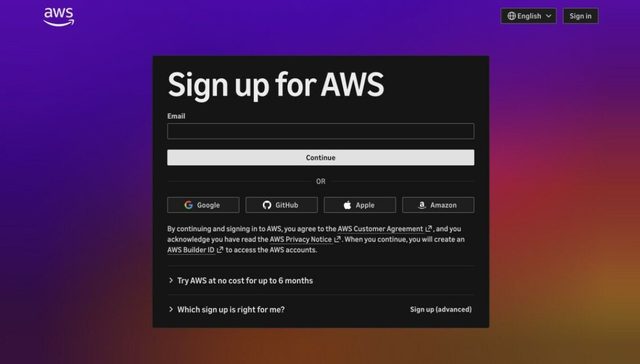
AWS tweaks console signup for AI builders to mask complexity

Amazon Web Services has updated its onboarding flow specifically for new AI developers, aiming to reduce initial friction. The revised experience simplifies the interface to hide underlying architectural complexity and introduces a spending cap by default. This change targets a smoother entry point for users who may be overwhelmed by the full breadth of AWS services.

  • New AI-focused signup flow reduces initial configuration steps
  • Spending cap applied by default to mitigate surprise costs
  • Complexity abstraction may obscure underlying service dependencies
  • Targets lower barrier to entry for AI/ML practitioners

AWS Resilience Hub has introduced three new features to help platform and SRE teams assess workload resilience. The update allows users to scope service inputs using existing EKS namespace labels, providing dependency insights for better visibility, and enables sharing resilience policies across organizations via AWS Organizations. These additions integrate with existing capabilities like automated dependency discovery and generative AI failure analysis.

  • Scope service inputs in Resilience Hub using EKS namespace labels instead of manual ARN lists.
  • Gain deeper visibility into workload resilience through new dependency insights.
  • Standardize and share resilience policies across multiple AWS accounts using AWS Organizations.
CHECKLISTNew Resilience Hub CapabilitiesScope service inputs using EKS namespace labelsGain visibility via new dependency insightsShare policies across orgs with AWS Organizations
AWS What's New awsdatabase ↺ since 09-19

Amazon Keyspaces GA in 11 new Regions for lower latency and data residency

Amazon Keyspaces, the managed serverless service compatible with Apache Cassandra, has reached general availability in 11 additional AWS Regions. This expansion enables customers to deploy Cassandra-compatible applications closer to end-users, reducing latency while ensuring data remains within specific geographic boundaries to satisfy residency mandates. As a serverless offering, it provides virtually unlimited throughput and storage, charging only for the resources consumed.

  • Keyspaces is now GA in 11 new regions, expanding geographic coverage for Cassandra workloads.
  • New regions help meet strict data residency requirements by keeping data within local boundaries.
  • Serverless architecture scales automatically to handle thousands of requests per second without provisioning.
  • Cost model remains pay-per-use, covering both throughput and storage consumption efficiently.
BY THE NUMBERSNew AWS Regions for Keyspaces11Expanded geographic coverageEnables lower latency and data residency

Trending on GitHub 1

roundup ↗
GitHub Trending (daily) githubrepos ⚠ unverified date/source

ZuodaoTech/everyone-can-use-english

人人都能用英语 https://1000h.org AI 是当今世界上最好的外语老师,Enjoy 做 AI 最好的助教。 网页版 Enjoy 全新版本已经上线,可访问 https://enjoy.bot 直接使用。 浏览器插件 Enjoy 浏览器插件已经上线,支持 YouTube 和 Netflix。可访问 Chrome Web Store 安装使用。 桌面版 新版桌面版将会是对网页版的套壳和增强,即将发布。 相关阅读 一千小时(2024) 简要说明 训练任务 语音塑造 大脑内部 自我训练 人人都能用英语(2010) 简介 第一章:起点 第二章:口语 第三章:语音 第四章:朗读 第五章:词典 第六章:语法 第七章:精读 第八章:叮嘱 后记 常见问题 请查询 文档 FAQ 。

  • Read the full item at GitHub Trending (daily).

Emerging Tech & Research 1

roundup ↗
GitHub Trending (daily) githubrepos ⚠ unverified date/source

Needle: 8-29MB foundation model for tool calls and extraction on edge devices

Cactus Compute released Needle, a tiny automation foundation model optimized for resource-constrained environments like phones, wearables, and microcontrollers. The entire model is delivered as a single 8-29 MB binary using a Simple Attention Network, trading general chat capabilities for superior performance on specific tasks. It excels at structured extraction and tool invocation, reliably filling arguments from user input without hallucinating calls for unsupported functions.

  • Needle fits in 8-29MB, making it viable for microcontrollers and wearables.
  • Optimized for tool calls and structured extraction rather than general chat.
  • Returns empty lists for unsupported functions instead of hallucinating arguments.
  • Outperforms models 10x larger on mobile tool execution tasks.
  • Single binary distribution simplifies deployment on edge hardware.
↑