OffNet Newsroom

Daily topic roundup

Automation / DevOps / IaC

Monday, August 03, 2026 · 8 stories, curated & summarized — click any story for the source.

Microsoft has released TypeScript 7.0, introducing a native compiler written in Go that accelerates build times by 8x to 12x. The release is currently unstable regarding its programmatic API, with stability expected in version 7.1. A compatibility package is provided to assist with transitions, and the project remains open source.

  • Build performance improves 8-12x due to the new native Go compiler backend.
  • Programmatic API is not yet stable; plan upgrades for version 7.1.
  • Compatibility packages exist to ease the transition from previous versions.
  • Project remains open source under Microsoft stewardship.

CrowdStrike reports an 89% increase in machine-assisted cyber activity, with attackers using AI both to execute breaches and as a target. This shift is compressing critical patch windows down to just 48 hours, forcing teams into reactive mode. The trend highlights a dual threat where automation accelerates exploitation speed beyond traditional defense timelines.

  • AI is now used both offensively to automate attacks and defensively as a target for exploitation.
  • Machine-assisted threat activity has jumped 89% according to CrowdStrike tracking data.
  • Critical vulnerability patch windows have shrunk to 48 hours, demanding faster response cycles.
Hugging Face Blog llmaiml ↺ since 07-31

Hugging Face: Idle GPUs Are the New Grounded Aircraft

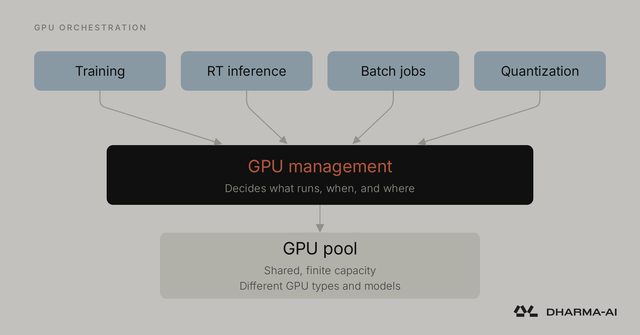
Hugging Face compares underutilized GPUs to grounded aircraft, emphasizing the critical need for active workload scheduling. The blog highlights that leaving resources idle represents a significant operational inefficiency in modern AI infrastructure. Effective management requires shifting focus from mere provisioning to continuous utilization optimization.

  • Idle hardware signals poor resource allocation strategies in AI fleets
  • Active scheduling is essential to maximize ROI on GPU investments
  • Infrastructure teams must treat compute capacity as a dynamic asset
InfoQ generaldevops ↺ since 08-01

Terraform Introduces tfpolicy for HCL-Based Policy-as-Code

HashiCorp has launched tfpolicy, a public beta framework that enables policy-as-code using native HCL syntax within HCP Terraform. This tool integrates governance directly into the Terraform workflow, removing the dependency on external policy engines. The goal is to streamline infrastructure governance by allowing teams to define and enforce rules using the same language used for infrastructure definition.

  • Enables policy-as-code using native HCL, unifying infrastructure and governance syntax.
  • Integrates directly into HCP Terraform workflows for seamless enforcement.
  • Eliminates the need for separate policy tools and languages like Rego.
  • Currently available in public beta within HCP Terraform.
AWS What's New awsdatabase ↺ since 07-30

EC2 Auto Scaling Instance Refresh now supported in CloudFormation

AWS CloudFormation now accepts an AutoScalingInstanceRefresh update policy, automating safe instance replacements during stack updates. This integration enables features like launch-before-terminate, alarm-based monitoring, and controlled rollouts with checkpoints. Scaling policies and health checks remain active throughout the process to maintain service availability, while rollback is managed via standard stack operations.

  • Configure AutoScalingInstanceRefresh as a CloudFormation update policy to automate safe replacements.
  • Leverage launch-before-terminate and alarm monitoring to minimize downtime during updates.
  • Use checkpoints with bake time for controlled, observable rollouts of new instances.
  • Scaling policies and health checks stay active, preserving service health during deployments.
  • Rollback is handled through standard CloudFormation stack rollback mechanisms.
HOW IT WORKSCloudFormation Instance Refresh1Configure update policy2Launch new instances3Monitor alarms4Verify checkpoints5Terminate old instances
The Register general ↺ since 08-02

Mitchell Hashimoto launches faster terminal multiplexer post-HashiCorp

Mitchell Hashimoto, who originally named HashiCorp, has released a new terminal multiplexer focused on speed improvements. The tool emphasizes persistent sessions as a foundational feature, signaling a return to core infrastructure development after his departure from the previous company. This entry marks a direct challenge in the developer tooling sector with performance as the primary differentiator.

  • Hashimoto returns to dev tools with a performance-centric terminal multiplexer.
  • Persistent sessions are highlighted as a key initial capability.
  • New tool likely targets users seeking speed improvements over existing multiplexers.
  • No direct integration or impact on HashiCorp's current product suite.
  • Signals renewed competition in the terminal session management space.
AWS What's New awsdatabase ↺ since 08-01

CloudWatch adds managed Prometheus collectors for AWS services

Amazon CloudWatch now offers fully managed collectors to ingest Prometheus metrics from EKS, EC2, ECS, MSK, and OpenSearch without self-hosted agents. This replaces the previous requirement to deploy and scale an OpenTelemetry Collector manually. Users simply provide scrape configurations, and CloudWatch handles provisioning and collection automatically.

  • Eliminates overhead of managing self-hosted OpenTelemetry Collector agents.
  • Supports EKS, EC2, ECS, MSK, and OpenSearch Service workloads.
  • Metrics delivered in OpenTelemetry format for unified PromQL querying.
  • Enables seamless alarming and dashboarding across AWS vended and scraped metrics.
HOW IT WORKSManaged Prometheus Ingestion11. User provides scrape configs22. CloudWatch auto-provisions agents33. Metrics collected automatically44. Unified PromQL querying

JDK 24 eliminates the monitor-related carrier-thread pinning that previously stalled Netflix and similar teams using Java 21. For JDK 25 LTS, the primary bottleneck has shifted to downstream-resource saturation, requiring explicit bounding in application code. The article maps these new failure modes and provides a practical sequence supported by public benchmarks.

  • JDK 24 resolves monitor-related carrier-thread pinning issues prevalent in Java 21.
  • JDK 25 LTS shifts the bottleneck to downstream-resource saturation.
  • Application code must now implement explicit bounding to handle saturation.
  • New failure modes require updated operational strategies and monitoring.