OffNet Newsroom

Daily topic roundup

Automation / DevOps / IaC

Saturday, August 01, 2026 · 8 stories, curated & summarized — click any story for the source.

HashiCorp has launched tfpolicy as a public beta feature within HCP Terraform to modernize infrastructure governance. This new framework allows teams to author policies using native HCL syntax, removing the dependency on external tools or separate languages for policy enforcement. By embedding policy creation directly into the Terraform workflow, the tool aims to streamline compliance and reduce operational friction for infrastructure teams.

  • Tfpolicy is now in public beta within HCP Terraform for early adoption.
  • Policies are authored in native HCL, eliminating the need for Rego or other languages.
  • Enforcement is integrated directly into Terraform workflows, reducing tool sprawl.
  • The framework simplifies governance by unifying policy creation and execution.
  • No separate external policy engines are required for basic governance tasks.

Amazon CloudWatch now offers fully managed collectors to ingest Prometheus metrics from AWS services like EKS, EC2, ECS, MSK, and OpenSearch. This eliminates the need to deploy, scale, and maintain self-managed OpenTelemetry Collectors. Users simply provide scrape configurations and resource connections, and CloudWatch handles the infrastructure automatically. The metrics arrive in OpenTelemetry format and support PromQL queries alongside native AWS metrics.

  • Eliminates operational overhead of managing self-hosted OpenTelemetry Collector agents.
  • Supports key AWS workloads including EKS, EC2, ECS, MSK, and OpenSearch.
  • Metrics are delivered in OpenTelemetry format for standardized ingestion.
  • Enables unified querying with PromQL alongside standard AWS vended metrics.
TRADE-OFFManaged vs Self-Hosted CollectorsSelf-Hosted CollectorsRequires manual deploymentNeeds constant scalingHigh maintenance overheadManaged CloudWatch…Automatic infrastructure handlingSupports key AWS workloadsUnified PromQL queryingvs

JDK 24 eliminates the monitor-related carrier-thread pinning that previously hindered virtual thread adoption in production environments like Netflix. With this issue resolved, JDK 25 LTS shifts the primary bottleneck to downstream resource saturation, requiring explicit bounding in application code. The article details specific failure modes and provides a practical benchmark sequence to manage these new constraints.

  • JDK 24 removes carrier-thread pinning, unblocking virtual thread scaling.
  • JDK 25 LTS bottlenecks shift to downstream resource saturation.
  • Applications must implement explicit bounding to prevent saturation.
  • Review failure modes specific to post-virtual-thread adoption.
  • Use provided benchmark sequence to validate resource limits.
AWS What's New awsdatabase

AWS Lambda adds Java 8, 11, 17 runtimes on Amazon Linux 2023

AWS Lambda now supports Java 8, 11, and 17 on Amazon Linux 2023, offering both managed runtimes and container base images. This update allows teams to migrate from Amazon Linux 2, which reached end-of-life on June 30, 2026, without forcing an immediate Java version upgrade. While migration to AL2023 is required for continued support and SLA eligibility, AWS recommends upgrading to Java 21 or 25 for optimal performance and features.

  • Migrate from AL2 to AL2023 to maintain SLA eligibility after June 30, 2026 end-of-life.
  • Java 8, 11, and 17 are now available on AL2023, enabling version-stable migration.
  • AWS recommends upgrading to Java 21 or 25 on AL2023 for latest features and performance.
  • Support includes both managed runtimes and container base images for flexibility.
COMPARISONSupported Java RuntimesJava 88Java 1111Java 1717

Amazon SageMaker Unified Studio now integrates full Git version control directly into Query Editor, Visual ETL, Workflows, and Notebooks. This update replaces the previous automatic sync model with flexible, file-level tracking managed via GitHub, GitLab, or Bitbucket. Notably, Notebooks gain explicit Git support for the first time, allowing teams to commit and push changes in a single action.

  • Notebooks now support Git version control, closing a previous gap in the platform.
  • Users select specific files to track rather than having project-level enforcement.
  • Repositories are decoupled from project creation, offering flexible integration.
  • Commit and push operations are unified across all project tools.
HOW IT WORKSUnified Git Workflow1Select files to track2Commit changes locally3Push to Git provider4Sync across tools
Hugging Face Blog llmaiml ↺ since 07-31

Hugging Face: Idle GPUs Are the New Grounded Aircraft

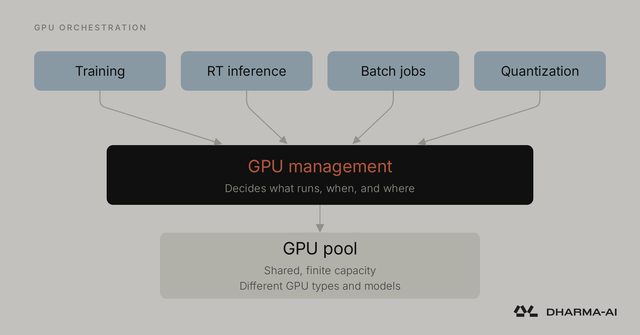
Hugging Face highlights the critical inefficiency of idle GPU resources in modern AI infrastructure, comparing them to grounded aircraft. The blog post emphasizes that unused compute capacity represents a significant waste of capital and energy. It advocates for aggressive scheduling and utilization strategies to maximize return on investment for expensive hardware.

  • Idle GPUs waste capital and energy, acting as a major operational inefficiency
  • Aggressive scheduling is required to keep expensive AI hardware fully utilized
  • Treating compute as a scarce resource improves overall ROI for AI deployments
Planet PostgreSQL database ↺ since 07-31

vip-manager v5 breaks HA behavior: review before apt upgrade

vip-manager v5 introduces breaking changes that alter how Virtual IPs are managed during PostgreSQL failovers. The tool relies on Distributed Configuration Stores like etcd or Consul to track leadership and attach the VIP accordingly. Upgrading without reviewing these changes risks unexpected cluster behavior during outages.

  • vip-manager v5 changes core HA logic; do not upgrade blindly.
  • Review breaking changes before running apt upgrade in production.
  • Ensure DCS/leader info sync matches new v5 expectations.
  • Test VIP attachment/removal logic in staging first.
CHECKLISTPre-Upgrade Checklist for VIP ManagerReview v5 breaking changes before upgradingTest VIP logic in staging environmentVerify DCS leader info syncDo not upgrade production blindly
InfoQ generaldevops ↺ since 07-30

AWS Lambda Self-Managed Storage Lifts Account Quota to 300 GB

AWS Lambda now supports deployment packages stored directly in customer-owned S3 buckets, which removes the per-Region code storage quota and raises the managed default limit from 75 GB to 300 GB. The per-function package size limits remain unchanged, and engineers must still use UpdateFunctionCode after replacing an object in S3. Terraform provider support for this feature is currently listed as an open enhancement request.

  • Per-Region code storage quota is removed; managed default raised to 300 GB
  • Per-function package size limits remain unchanged despite storage changes
  • UpdateFunctionCode API call is still required after S3 object replacement
  • Terraform provider support is not yet available; track as open request
  • Self-managed S3 storage offers more control but requires manual code updates