OffNet Newsroom

Archive snapshot

Saturday, August 08, 2026

Daily signal on databases, AI, and the tech that matters.

36 new today 44 stories 9 sections 15 for the DBA desk

Database Technology 7

roundup ↗

Shaun Thomas concludes his series on PostgreSQL 19 by highlighting the release's extensive scope, noting it contains more enhancements than previous versions. The post serves as a final overview of new syntax features and other marquee additions before the official launch. It emphasizes the importance of reviewing detailed changelogs to catch subtle but significant updates that might otherwise be missed.

  • Postgres 19 is positioned as a major release with an unusually high volume of enhancements.
  • Reviewing detailed release notes is critical to identify subtle syntax and feature updates.
  • The author's series covers multiple marquee features beyond just syntax changes.
  • This post acts as a final roundup of key improvements in the upcoming version.
WORTH QUOTINGPostgres 19 Release OverviewPostgres 19 contains more enhancements than previousversions.— Shaun Thomas
GitHub Trending (daily) githubrepos ⚠ unverified date/source

GitHub: celld offers self-hosted distributed Durable Objects using SQLite and S3

Celld is an open-source daemon that enables self-hosting Cloudflare Workers and Durable Objects on private infrastructure. It addresses the limitations of shared databases by treating each object as an isolated SQLite database, with state replicated to an S3-compatible bucket for coordination. Nodes operate without a central control plane or consensus mechanism, relying instead on the object store for synchronization.

  • Each Durable Object is its own SQLite database, eliminating contention and blast-radius failures of shared DBs.
  • Nodes coordinate solely through an S3-compatible bucket, removing the need for a control plane or consensus layer.
  • Idle cells hibernate to near-zero resource usage, optimizing cost and efficiency.
  • Fleet shares deployment and state via S3, allowing decentralized scaling without complex infrastructure.
HOW IT WORKSCelld Decentralized Sync Flow1Isolated SQLite DB per Object2State Replication to S3 Bucket3S3-Based Coordination Between Nodes4Idle Cells Hibernate to Zero

Percona evaluated their DuckDB-based MySQL storage engine using a 500GB TPC-H dataset comprising three billion lineitem rows. The test ran on an 80-core server with 187GB of RAM, comparing InnoDB, plain DuckDB, and the new MySQL+DuckDB hybrid engine side-by-side. This scale factor provides a concrete view of how the columnar storage layer performs under significant data volume constraints.

  • Validates DuckDB engine capacity at 3 billion rows, relevant for mid-sized analytics workloads.
  • Runs on commodity hardware specs (80 cores, 187GB RAM) rather than specialized big data clusters.
  • Enables columnar processing directly within MySQL without requiring external data warehouse pipelines.
  • Performance baseline established against InnoDB and pure DuckDB for hybrid query optimization.

Percona has introduced Percona Search for MongoDB, a downstream distribution of mongot, the engine behind MongoDB Atlas Search. This release provides full-text and vector search capabilities to self-managed MongoDB deployments. It enables the use of advanced AI-driven search techniques without requiring a cloud provider.

  • Percona Search is a downstream build of mongot, identical to the engine in Atlas Search.
  • Enables full-text and vector search capabilities for self-hosted MongoDB instances.
  • Supports AI application development using advanced search techniques on-prem or in private clouds.
  • Offers a path to avoid vendor lock-in associated with managed MongoDB Atlas services.
TRADE-OFFAtlas vs Percona SearchMongoDB AtlasManaged cloud serviceVendor lock-in riskIncludes mongot enginePercona SearchSelf-managed deploymentAvoids vendor lock-inIdentical mongot enginevs
PostgreSQL News database ↺ since 08-04

pgBackRest 2.59.0 Released with Enhanced Backup and Security Features

The pgBackRest community has released version 2.59.0, continuing its reputation as a scalable backup and restore solution for PostgreSQL. This update introduces malware and ransomware protection capabilities alongside block incremental backups to optimize storage and performance. The release maintains support for parallel operations, multiple compression types, and encryption to ensure robust data safety across diverse infrastructure.

  • Block incremental backups reduce storage overhead and speed up recovery windows.
  • New malware/ransomware protection adds a critical layer of data integrity assurance.
  • Parallel async archiving and resume capabilities minimize downtime during backups.
  • Support for S3, Azure, GCS, and SFTP ensures flexible repository options.
  • Page checksums validation during backup helps detect corruption early.
HOW IT WORKSpgBackRest 2.59.0 Backup Pipeline1Parallel async archiving starts2Block incremental backups run3Malware and ransomware scan4Resumable archive completes
PostgreSQL News database ↺ since 08-05

pgAdmin 4 v9.17 Released with 7 CVE Fixes and Helm Updates

The pgAdmin 4 Development Team has released version 9.17, addressing seven security vulnerabilities including CVE-2026-17346 through CVE-2026-17351 and CVE-2026-17566. The update introduces new features such as including authenticated user identity in HTTP access logs and adding an opt-in Gateway API HTTPRoute template to the Helm chart. Additionally, a new preference allows capping the row count fetched by the plain View Data action to improve usability on large tables.

  • Patch immediately to resolve 7 critical security vulnerabilities (CVEs).
  • Update Helm charts to support opt-in Gateway API HTTPRoute templates.
  • Configure row count caps in View Data to prevent performance issues on large tables.
  • Enable authenticated user identity logging for improved access auditing.
CHECKLISTpgAdmin 4 v9.17 Patch GuidePatch immediately for 7 CVE fixesUpdate Helm charts for Gateway APICap row counts in View DataEnable user identity in access logs

LLMs 6

roundup ↗
Hacker News (100+ points) general

DeepSeek V4 Flash hits ARC Prize leaderboard top spot

DeepSeek V4 Flash has secured a leading position on the ARC Prize leaderboard, as detailed in the official results from ArcPrize. The model is generating significant discussion on Hacker News, evidenced by over 600 points and hundreds of comments. This release marks a notable milestone in the competition for autonomous reasoning capabilities.

  • DeepSeek V4 Flash is now a top contender in the ARC Prize benchmark.
  • The model shows strong performance in automated reasoning tasks.
  • Community interest is high, with 600+ points on Hacker News.
  • Results are officially published on the ArcPrize website.

OpenAI has released an improved version of GPT-5.6 Sol within ChatGPT, highlighting gains in accuracy and consistency. Simultaneously, the company is expanding access to the GPT-5.6 Luna model, making it available to free-tier users. This update also includes unlimited everyday chats using the Luna model for a broader audience.

  • GPT-5.6 Sol receives accuracy and consistency improvements in ChatGPT.
  • GPT-5.6 Luna is now accessible to free users, broadening availability.
  • Free users gain unlimited everyday chat capabilities with GPT-5.6 Luna.
  • No database or infrastructure changes required for end-user access.

Research indicates that left to their own devices, AI agents frequently struggle to fully remediate security flaws. The study highlights a gap between attempted fixes and actual closure of vulnerabilities when autonomous tools operate without adult supervision. This suggests current autonomous patching capabilities are insufficient for critical infrastructure without rigorous human validation.

  • Autonomous AI patching often results in incomplete remediation of security flaws
  • Human supervision remains essential to verify and close vulnerability gaps
  • Deploying self-healing systems requires strict oversight protocols to ensure efficacy
  • Current AI tools lack reliability for unsupervised critical infrastructure maintenance

Jacob Jackson at ByteofDev has created claudegres, a system where the Claude AI model serves as the complete database backend rather than just an optimizer or query writer. Christophe Pettus highlights this project as a novel, if risky, exploration of AI replacing traditional relational engine components. The concept pushes the boundary of what constitutes a database by substituting the query planner and executor with generative AI logic.

  • ClaudeGres replaces the traditional PostgreSQL backend entirely with Claude AI, not just for tuning.
  • The project demonstrates a radical shift from deterministic SQL execution to generative AI responses.
  • Pettus notes the approach is 'admirably irresponsible,' signaling high risk and experimental nature.
  • This is not a production-ready tool but a proof-of-concept for AI-native database architectures.
Hacker News (100+ points) general

DOE Launches Genesis Open Models Initiative for Research AI

The U.S. Department of Energy has announced the Genesis Open Models Initiative, launching a new portal for open-source AI models. Hosted by Argonne National Laboratory, the project aims to provide high-quality, transparent foundational models for scientific research. This effort supports the broader goal of democratizing access to advanced AI tools within the national laboratory system.

  • DOE is centralizing open model distribution via an Argonne-hosted portal.
  • Focus is on foundational models tailored for scientific research use cases.
  • Initiative promotes transparency and reproducibility in government-funded AI.
CHECKLISTDOE Genesis Initiative GoalsCentralize open model distribution via ArgonneProvide foundational models for scientific researchPromote transparency and reproducibility in AI
OpenAI News llmaiagents ↺ since 08-04

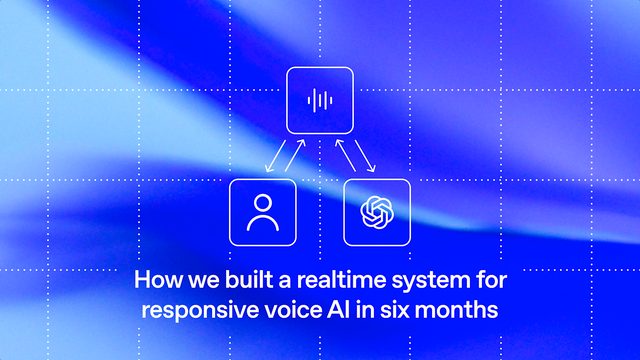
OpenAI ships GPT-Live for turnless, low-latency voice AI interactions

OpenAI has released GPT-Live, a system designed for continuous voice interaction that eliminates traditional turn-taking boundaries. By leveraging a turnless speech model and a low-latency architecture, the platform enables faster and more natural conversational flows. This release aims to reduce the friction often found in standard voice AI interfaces.

  • GPT-Live uses a turnless model to allow seamless, interruptible voice conversations without rigid turn boundaries.
  • The architecture prioritizes low latency to create a more natural, real-time user experience.
  • This release signals a shift toward continuous voice interaction rather than discrete command-response cycles.

AI / ML 4

roundup ↗
Hacker News (100+ points) general

Databricks strategies for controlling AI coding costs at scale

A recent Databricks blog outlines methods for managing the financial impact of AI-assisted coding in large engineering teams. The article details how organizations can track usage, enforce guardrails, and optimize model selection to prevent budget overruns. It emphasizes the need for visibility into token consumption and the cost-benefit analysis of different AI tooling tiers.

  • Track per-developer AI usage to identify high-cost patterns early
  • Implement guardrails to limit unnecessary API calls and retries
  • Evaluate cost-benefit ratios when selecting AI model tiers
  • Monitor token consumption trends to forecast future spending
  • Enforce policies to prevent redundant or low-value AI interactions

AMD has acquired Taalas, an AI chip startup, to integrate its technology for embedding AI models directly into silicon. This move aims to significantly boost inference performance by reducing the overhead associated with traditional software-based execution. The acquisition aligns with AMD's strategy to enhance its hardware capabilities for specialized AI workloads.

  • AMD targets inference performance gains by integrating Taalas' silicon-etching technology.
  • Acquisition suggests a shift toward hardware-embedded AI models for efficiency.
  • Taalas' tech may reduce latency and power consumption for AI inference tasks.
  • Competitive landscape shifts as major chipmakers pursue specialized AI hardware.
AWS Database Blog awsdatabase ↺ since 08-06

AWS RDS for Oracle adds OML4SQL for in-database AutoML

Amazon RDS for Oracle now supports Oracle Machine Learning for SQL (OML4SQL), enabling users to build, train, and score models entirely within SQL. The new AutoML feature automatically selects the best algorithm without requiring data movement or external platforms. This allows practitioners to execute machine learning workloads directly on the database engine.

  • Train and score models using pure SQL syntax, eliminating code context switching.
  • AutoML feature handles algorithm selection automatically to optimize model performance.
  • No data movement to external ML platforms reduces latency and security risks.
  • Available now on Amazon RDS for Oracle for immediate adoption.
AWS What's New awsdatabase ↺ since 08-07

Amazon Quick Sight adds multi-dataset topics for runtime joins and NLQ

Amazon Quick Sight now supports multi-dataset topics, allowing users to define relationships across multiple datasets within a single topic. This capability enables runtime joins for both dashboard visualizations and natural language queries, eliminating the need for manual pre-joining. The update reduces reliance on SPICE capacity and removes the friction of rebuilding datasets when models or use cases change.

  • Define relationships once in a topic for reuse across dashboards and NLQ.
  • Joins execute at runtime, avoiding manual pre-join data preparation steps.
  • Reduces SPICE storage consumption by decoupling dataset storage from join logic.
  • Simplifies model maintenance by removing dependency on static pre-joined datasets.
HOW IT WORKSMulti-Dataset Topic Workflow1Define relationships in a single topic2Reuse across dashboards and NLQ3Joins execute at runtime4No manual pre-joining required

Agentic AI 8

roundup ↗

Instacart has launched Blueberry, an AI-driven system designed to accelerate incident response for on-call engineers. The tool integrates AI agents with operational data and historical incident records to formulate grounded root cause hypotheses directly within Slack. By leveraging parallel subagents and MCP integrations, Blueberry aims to reduce investigation latency while ensuring engineers retain final control over the diagnostic process.

  • AI agents generate root cause hypotheses using historical incident data and live operational metrics.
  • Integration with Slack allows engineers to receive and act on insights without context switching.
  • Parallel subagents and MCP tools enable faster data gathering during active incidents.
  • The system prioritizes human-in-the-loop control to maintain reliability and trust.
  • Goal is to reduce mean time to investigation (MTTI) for production issues.

Amazon Bedrock AgentCore now supports memory, policy, and harness capabilities within AWS GovCloud (US-West). The update provides agents with short-term context and long-term persistent insights, eliminating the need for teams to manage complex memory infrastructure. Centralized policy controls allow for fine-grained management of agent-tool interactions outside of agent code, enabling faster scaling in regulated environments.

  • AgentCore now supports AWS GovCloud (US-West) for regulated workloads.
  • Short-term and long-term memory features automate context and preference extraction.
  • Centralized policy controls decouple tool interaction rules from agent code.
  • Teams can scale context-aware agents from prototype to production faster.
CHECKLISTAgentCore GovCloud BenefitsDeploy agents in regulated GovCloud environmentsAutomate short and long-term memoryDecouple policy from agent codeScale context-aware agents faster

AWS WAF now offers a managed rule group from Salt Security to detect and mitigate API-focused attacks without custom rule maintenance. This update specifically targets AI agent traffic and Model Context Protocol (MCP) endpoints, providing visibility and blocking for unauthenticated access. It covers complex vectors like credential brute force, SSRF, JWT anomalies, and excessive GraphQL queries.

  • Deploy Salt Security managed rules via AWS Marketplace for immediate API and MCP protection.
  • Gain visibility into Model Context Protocol (MCP) traffic and block unauthenticated agent access.
  • Mitigate complex API threats including SSRF, prototype pollution, and JWT anomalies out-of-the-box.
  • Leverage built-in rate limiting to defend against credential brute force and excessive GraphQL queries.
TRADE-OFFAPI Threat Protection ShiftTraditional WAFRequires custom rule maintenanceMisses AI agent trafficLacks MCP visibilitySalt Security RulesManaged out-of-the-box protectionDetects complex API vectorsBlocks unauthenticated accessvs

Martin Spier outlines how OpenAI handles the surge in code change volume driven by agentic workflows. The presentation highlights that rapid shipping introduces hidden systemic performance costs beyond just GPU utilization. To counter this, OpenAI deploys always-on AI agents to automate profiling, detect regressions, and drive continuous optimization at global scale.

  • Agentic workflows significantly increase code change volume, straining traditional performance review processes.
  • Performance bottlenecks extend beyond raw GPU compute to include systemic overhead from rapid iteration.
  • Always-on AI agents are used to automate continuous profiling and regression detection.
  • Automated optimization is critical for maintaining speed and scalability at massive global scale.

Cloudflare has released Cloudflare Computer, an open-source runtime that provides AI agents with persistent state rather than relying on ephemeral containers. The solution leverages Cloudflare Isolates to enable fast serverless execution, aiming to reduce costs while improving scalability and performance for agent workloads.

  • Cloudflare Computer offers persistent state for AI agents, moving beyond ephemeral containers.
  • The runtime is open-source and built on Cloudflare Isolates for serverless execution.
  • Design goals include lower costs, faster execution, and better scalability for agents.
  • This approach blurs the line between standard serverless functions and full computer environments.

Spotify engineers Jo Kelly-Fenton and Aleksandar Mitic introduced Honk, an AI coding agent designed to manage complex migrations across thousands of repositories. The presentation details architectural choices such as decoupling CI verification runtimes from the AI agents to maintain stability. Key challenges addressed include mitigating automated pull request bottlenecks and enforcing aggressive code standardization at scale.

  • Honk handles large-scale migrations across Spotify's vast multi-repo fleet.
  • CI verification runtimes are decoupled from AI agents for better reliability.
  • Automated PR bottleneck management is critical for high-volume AI workflows.
  • Aggressive standardization is driven through centralized AI agent enforcement.

OpenAI has committed to integrating Astra security measures into its offerings, while Anthropic is simultaneously loosening restrictions on its Fable tool. This dual move reflects a broader industry shift toward balancing enhanced safety protocols with increased model autonomy. The changes suggest a maturation in how major providers handle the trade-off between operational freedom and risk management.

  • OpenAI is adopting Astra security standards to bolster safety frameworks.
  • Anthropic is reducing constraints on Fable, granting models more autonomy.
  • Industry trend shows providers adjusting safety-to-freedom ratios.
  • Engineers should monitor policy shifts for compliance and integration impacts.

Major AI vendors are collaborating on Agent Plugins 1.0, a specification designed to create a standardized, containerized format for exchanging tools and skills between different agent platforms. This initiative aims to solve the fragmentation in the agent ecosystem by enabling a write-once, run-anywhere approach for plugin distribution. The move seeks to reduce vendor lock-in and simplify integration for developers building autonomous systems.

  • Standardized container format allows plugins to run across competing agent platforms
  • Aims to eliminate current fragmentation and vendor lock-in in the AI agent space
  • Simplifies integration for developers by defining a universal tool exchange protocol
  • Collaborative effort suggests industry-wide push for interoperability standards

Automation / DevOps / IaC 7

roundup ↗
Hacker News (100+ points) general

Nixpkgs Core Team Disbands Amidst Governance Shifts

The Nixpkgs core team has officially disbanded, marking a significant structural change for the project. This decision reflects ongoing governance challenges and the need for a new operational model to maintain the repository. The community is now navigating a transition period without the previous centralized coordination layer.

  • Nixpkgs loses its traditional core team structure, altering maintenance workflows.
  • Governance models are being re-evaluated to handle the project's scale.
  • Contributors should prepare for potential shifts in review and merge processes.
  • Ecosystem stability depends on the success of the new decentralized approach.
HOW IT WORKSNixpkgs Transition Pipeline1Core team disbands2Governance models re-evaluated3New decentralized approach adopted4Ecosystem stability tested

Autobase Enterprise 2.10 introduces direct cluster management capabilities through the Console UI, allowing admins to perform switchover, failover, restart, and deletion tasks without CLI access. The release also adds a System Parameters tab for configuring advanced settings like regional options and supports cluster deployment on local disks. Additionally, extended Ansible playbooks enable automated maintenance workflows for PostgreSQL environments.

  • Perform critical cluster actions like switchover and failover directly from the UI
  • Deploy PostgreSQL clusters using local disk storage options
  • Access advanced system configuration via the new System Parameters tab
  • Automate maintenance tasks with extended Ansible playbooks
CHECKLISTAutobase 2.10 Key FeaturesManage clusters directly via UIDeploy on local disk storageConfigure advanced system parametersAutomate maintenance with Ansible

Version 1.4.2 of langchain-openai addresses critical error handling and security concerns. The release adds explicit handling for ContextWindowExceededError to prevent uncaught exceptions during long context usage. It also ensures MCP authorization headers are properly redacted in logs and preserves text options in Responses API calls.

  • Explicitly handles ContextWindowExceededError to improve stability with long contexts.
  • Redacts MCP authorization tokens in logs to prevent credential leakage.
  • Preserves Responses text options, ensuring compatibility with newer API behaviors.
  • Filters langchain-generated content block IDs to avoid parsing conflicts.
  • Minor dependency bumps across three directories; verify environment compatibility.

GitHub has consolidated npm and Actions security changes from March to July 2026, moving several controls from optional flags to enforced defaults. These updates target supply chain attacks by altering baseline behaviors rather than simply adding new configuration options. The industry response, particularly on Hacker News, centers on whether mandatory waiting periods effectively mitigate risk or if package signing is a superior alternative.

  • GitHub enforces defaults for npm and Actions security controls to reduce supply chain attack surface
  • Changes consolidate updates shipped between March and July 2026 into a single policy shift
  • Debate focuses on waiting periods versus package signing as the primary mitigation strategy
  • Practitioners should audit workflows for new default behaviors that may break existing pipelines

AWS IAM Identity Center now allows users to enable multi-Region support with a single click when creating a new organization instance. This simplifies previous workflows that required manual KMS key creation and regional configuration. The new multi-Region option automatically provisions a customer-managed key and replicates the instance to an additional Region for resilience.

  • New org instances can now be deployed as multi-Region with one click
  • Automatic KMS key creation removes manual infrastructure setup steps
  • Instance replication ensures resilient access across multiple AWS Regions
  • Three configuration options available: single-Region, multi-Region, or custom
TRADE-OFFIAM Identity Center SetupPrevious WorkflowManual KMS key creationRegional configuration stepsHigher operational overheadNew One-Click SetupAutomatic key provisioningInstant multi-Region replicationSimplified resilience setupvs

LangChain has released version 1.5.4 of the Anthropic integration, addressing critical handling of tool schemas that previously failed with unsupported top-level composition. The update also ensures that the caller's explicit tool_choice settings are preserved during execution. Additionally, a new user_profile_id convenience attribute is added, alongside routine dependency bumps across three directories.

  • Fixes crashes when Anthropic tool schemas use unsupported top-level composition.
  • Preserves caller-specified tool_choice to prevent unintended function calling behavior.
  • Adds user_profile_id attribute for easier access to user profile contexts.
  • Includes routine dependency updates across multiple LangChain directories.
CHECKLISTLangChain 1.5.4 Key FixesFixes crashes from unsupported tool schema compositionPreserves explicit tool_choice settingsAdds user_profile_id convenience attributeUpdates dependencies across three directories
GitHub Trending (daily) githubrepos ⚠ unverified date/source

mise unifies dev tools, env vars, and tasks in a single CLI

mise is a development environment manager that prepares projects before each command runs. It consolidates tool installation, environment variable loading, and task execution into a single mise.toml file. This ensures consistent setups across new shells, code checkouts, and CI jobs.

  • Centralizes dev tools, env vars, and tasks in one configuration file
  • Ensures consistent environments across shells, checkouts, and CI
  • Manages installation and switching for hundreds of tools like Node and Python
  • Loads project-specific env vars including .env files automatically
HOW IT WORKSMise Automation Pipeline1Checkout code2Load mise.toml3Install tools4Set env vars5Run task

AWS 8

roundup ↗

AWS IAM Identity Center now allows you to disable AWS account access management during initial organization instance setup. This enables using the service solely for workforce identity integration with AWS applications, decoupling app SSO from account-level permissions. The change applies only to new instances and does not retroactively affect existing configurations.

  • New org instances can now decouple app SSO from AWS account access management
  • Use Identity Center for application access only, without managing account permissions
  • Feature is available only at initial instance configuration stage
  • Existing Identity Center instances remain unaffected by this change
TRADE-OFFIdentity Center DecouplingBefore ChangeSSO and account permissions linkedCannot disable account managementTight integration requiredNew InstancesSSO decoupled from permissionsAccount management optionalApp-only SSO supportedvs

Amazon Timestream for InfluxDB now supports on-demand and scheduled backups for both InfluxDB 2 and 3 engines. Users can manage up to four automated backup configurations with custom retention periods or trigger one-time snapshots via the console, CLI, or API. Restores can be applied to new resources or overwrite existing ones, giving teams direct control over data protection strategies.

  • Supports both InfluxDB 2 and 3 engines across console, CLI, and API.
  • Allow up to four automated backup schedules with flexible retention.
  • Enable on-demand backups before risky migrations or config changes.
  • Restore to a new resource or overwrite existing data on demand.
TRADE-OFFBackup Strategy OptionsAutomated SchedulesUp to four configurationsCustom retention periodsHands-off protectionOn-Demand SnapshotsTrigger manually via APIPre-migration safety netImmediate controlvs

Amazon EC2 R8i and R8i-flex instances are now available in the Europe (Milan) region, powered by custom Intel Xeon 6 processors exclusive to AWS. These new instances provide up to 20% higher performance than the previous R7i generation, with significant gains in memory bandwidth and price-performance. Specific workloads see even larger improvements, including 30% faster PostgreSQL performance and 60% faster NGINX web applications.

  • R8i instances use custom Intel Xeon 6 processors for highest cloud memory bandwidth.
  • PostgreSQL workloads see up to 30% performance improvement over R7i instances.
  • NGINX web apps are up to 60% faster, boosting web serving efficiency.
  • R8i-flex offers memory-optimized options for specific high-memory workloads.
  • Migration to Milan region now supports these latest Intel-based compute options.
COMPARISONPerformance Gains in MilanGeneral Performance20%PostgreSQL Speed30%NGINX Speed60%

AWS has added authorizer log delivery for Amazon MSK Provisioned clusters, including Standard and Express brokers, at no extra cost. This feature captures details of denied access requests, such as client IP addresses and targeted APIs, to aid in troubleshooting and security compliance. Logs can be routed to CloudWatch Logs, S3, or Data Firehose via the console or CLI.

  • Free authorizer logs for Provisioned MSK clusters (Standard/Express)
  • Capture denied request details including client IP and API
  • Route logs to CloudWatch, S3, or Data Firehose
  • Enable via console or CLI for new and existing clusters
HOW IT WORKSAuthorizer Log Routing Paths1Enable Authorizer Logs2Route to CloudWatch3Send to S34Stream via Data Firehose
Hugging Face Blog llmaiml

Baseten Joins Hugging Face Inference Providers

Baseten has been integrated into the Hugging Face Inference Providers ecosystem, allowing users to deploy models via Baseten's infrastructure directly through the Hugging Face API. This partnership expands the available serving options for models hosted on the Hub, offering an alternative to default providers. Engineers can now route inference requests to Baseten endpoints using standard Hugging Face client libraries.

  • Baseten is now a supported provider within Hugging Face Inference API.
  • Enables direct model serving via Baseten infrastructure from HF Hub.
  • Simplifies deployment by using standard HF client libraries for routing.
  • Provides an alternative serving backend for models on the Hub.
AWS What's New awsdatabase ↺ since 08-07

ECS supports fractional GPU scheduling on G6f instances

Amazon ECS now allows fractional GPU allocation using EC2 G6f instances, enabling workloads to use GPU partitions as small as 1/8 of an NVIDIA L4 Tensor Core. This feature targets small-model AI inference, experimentation, and graphics rendering by allowing precise right-sizing of container resources. Users can specify fractional requirements like 0.125, 0.25, or 0.5 GPUs directly in the task definition container settings.

  • Right-size containers for small AI inference and experiments without provisioning full GPUs.
  • Set fractional GPU requests (0.125, 0.25, 0.5) directly in ECS task definitions.
  • Reduce infrastructure costs by avoiding over-provisioning of GPU memory and compute.
  • Works with NVIDIA L4 Tensor Core GPUs on G6f instances for efficient resource utilization.
CHECKLISTWhat matters hereRight-size containers for small AI inference and experiments without…Set fractional GPU requests (0.125, 0.25, 0.5) directly in ECS task…Reduce infrastructure costs by avoiding over-provisioning of GPU…Works with NVIDIA L4 Tensor Core GPUs on G6f instances for efficient…
AWS What's New awsdatabase ↺ since 08-06

DynamoDB adds real-time vector search with single-digit ms latency

Amazon DynamoDB now offers general availability for native vector search, allowing engineers to index and query embeddings directly within DynamoDB tables. The feature delivers single-digit millisecond latency with over 99% recall, designed to handle datasets scaling into the trillions of vectors. Users can store embeddings alongside standard attributes and utilize approximate nearest neighbor searches using models from sources like Amazon Bedrock.

  • Native vector search eliminates the need for external vector databases for many AI workloads.
  • Single-digit millisecond latency and 99%+ recall scale to trillions of vectors.
  • Embeddings can be stored alongside standard DynamoDB attributes in the same table.
  • Supports approximate nearest neighbor (ANN) search via vector indexes.
  • Integrates with Amazon Bedrock models for generating embeddings.
BY THE NUMBERSDynamoDB Vector Search Recall Rate99%Vector search recall accuracyNative feature with single-digit ms latency
AWS Database Blog awsdatabase ↺ since 08-06

Amazon DynamoDB adds native vector search for semantic queries

DynamoDB now supports native vector similarity search, eliminating the need to maintain separate vector databases for applications using DynamoDB for operational data. The platform introduces metering for vector search operations, as demonstrated in a sample build using Amazon Bedrock embeddings on research paper abstracts. This update allows developers to handle both transactional and semantic search workloads within a single managed NoSQL service.

  • Consolidate operational and vector search workloads into a single DynamoDB table.
  • Monitor metering costs specifically associated with vector search operations.
  • Leverage Amazon Bedrock for embedding generation within the same ecosystem.
  • Reduce architectural complexity by removing external vector database dependencies.

Oracle Ecosystem 1

roundup ↗
Hacker News (100+ points) general

Oracle bans AI-generated code from OpenJDK submissions

Oracle has implemented a policy prohibiting the inclusion of AI-generated code in OpenJDK contributions. This move stands in contrast to recent claims by CEO Larry Ellison suggesting the company is not writing its own code via AI. The decision aims to maintain code quality and licensing compliance within the core Java distribution.

  • OpenJDK contributors must now certify code origins, blocking automated AI outputs.
  • Policy contradicts Ellison's public stance on Oracle's internal AI coding practices.
  • Ensures strict licensing compliance and traceability for Java core maintenance.
  • Signals a defensive posture on IP ownership in open-source governance.
TRADE-OFFOracle AI StanceOpenJDK PolicyBans AI code submissionsRequires origin certificationEnsures licensing complianceCEO ClaimsDenies using AI internallyContradicts new rulesSignals defensive IP posturevs

Trending on GitHub 2

roundup ↗
GitHub Trending (daily) githubrepos ⚠ unverified date/source

Prime Agent: Self-Improving RLM for Autonomous Coding

Prime Agent is an open-source tool that applies Recursive Language Models to coding and research tasks. It treats context as variables and uses recursive subagents as function calls within a persistent REPL environment. The system includes a Continual Harness to store durable state, memories, and skill descriptions for evidence-backed refinement.

  • Uses RLM abstraction to treat prompts as variables for dynamic context management.
  • Supports programmatic tool calling via recursive subagents in a persistent REPL.
  • Continual Harness stores durable state including memories and skill descriptions.
  • Enables small, evidence-backed updates to agent capabilities during sessions.
GitHub Trending (daily) githubrepos ⚠ unverified date/source

Semantica: Open-source graph-native infrastructure for accountable AI and causal reasoning

Semantica is a self-hostable platform designed to ingest enterprise data and construct context and knowledge graphs for AI agents. It emphasizes decision intelligence through deterministic reasoning, ontology management, and full decision provenance to ensure traceability. The system supports polyglot graph storage with both RDF and LPG models, aiming to provide a governed, zero-vendor-lock-in alternative for regulated domains.

  • Supports both RDF and LPG graph models for flexible knowledge modeling.
  • Builds context graphs to enable causal reasoning over enterprise data.
  • Bakes in decision provenance for explainable and traceable AI outputs.
  • Self-hostable and auditable, targeting high-stakes regulated industries.
  • Installable via pip, positioning it as a developer-friendly infrastructure layer.
TRADE-OFFSemantica vs Traditional AIBlack Box AIOpaque decision logicHard to trace errorsVendor lock-in risksSemantica PlatformFull decision provenanceCausal reasoning clarityZero vendor lock-invs

Emerging Tech & Research 1

roundup ↗

Researchers from MIT have introduced TONTOU, a new side-channel attack that exploits timer interrupts to reopen the branch predictor poisoning window. This vulnerability allows the attack to slip through existing Spectre mitigations on both Intel and AMD processors. The team demonstrated the concept with a working exploit targeting Zen 2 architecture, confirming that current defenses may be insufficient against this specific timing-based approach.

  • Timer interrupts can reset or expose branch predictor states, creating a new attack vector.
  • Existing Spectre mitigations may fail against TONTOU on Intel and AMD CPUs.
  • Zen 2 architecture is vulnerable, as proven by the researchers' working exploit.
  • Database and cloud workloads relying on shared cores are at risk of information leakage.
  • Monitor for new microcode updates addressing timer-interrupt-based branch prediction flaws.